Article
Préparation de l'article…
Si l'article doit être traduit, cela peut prendre quelques secondes.
Si l'article doit être traduit, cela peut prendre quelques secondes.
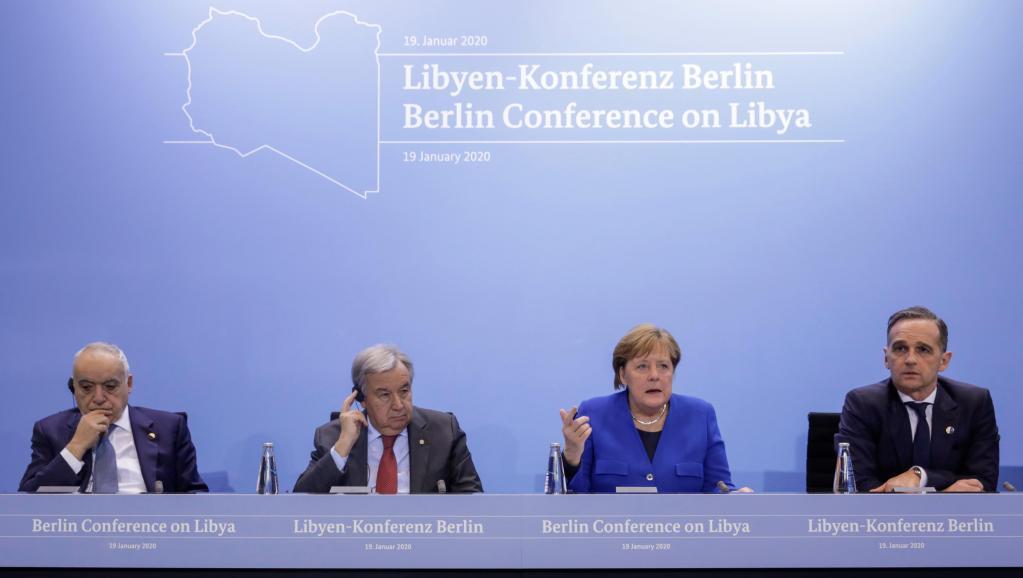
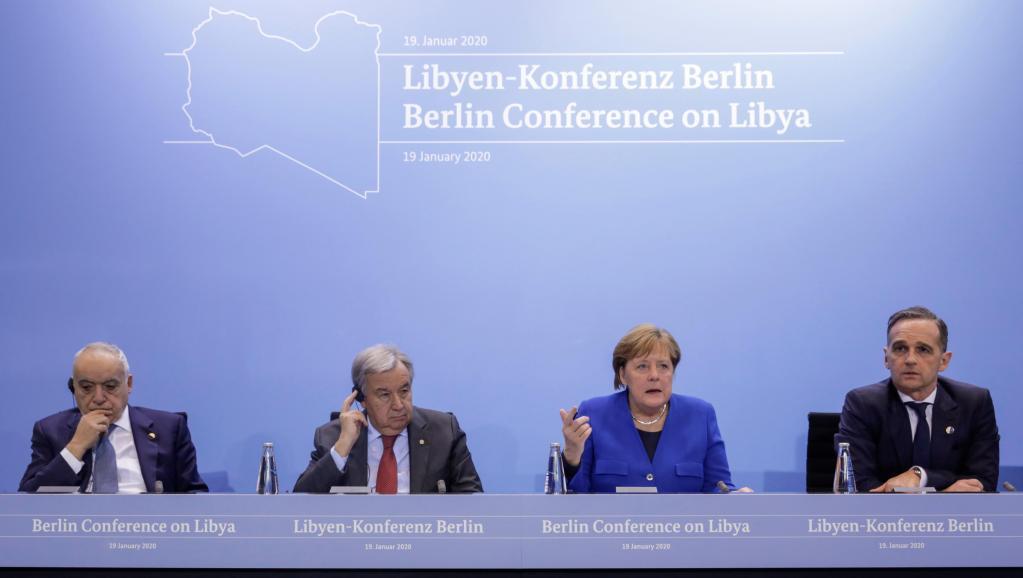
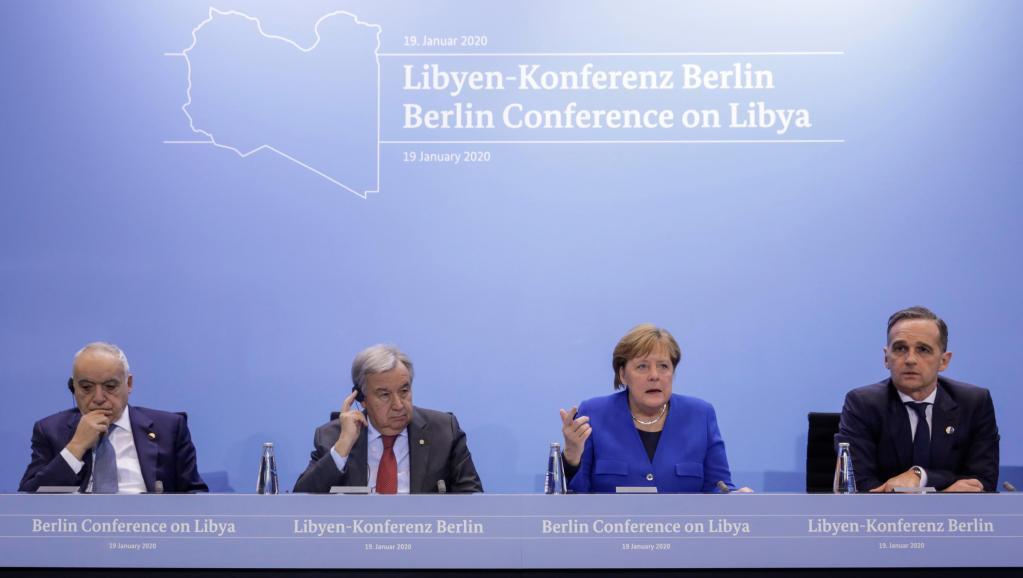
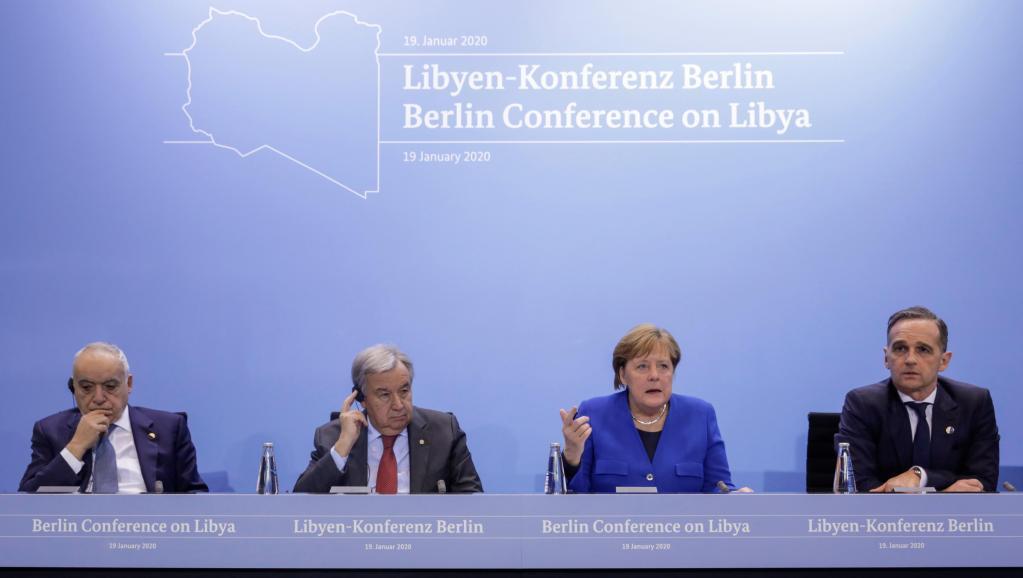
Les dirigeants des principaux pays concernés par le conflit en Libye se sont engagés dimanche 19 janvier à Berlin à respecter l’embargo sur les armes décidé en 2011 par les Nations unies et à renoncer à toute « interférence » étrangère dans le conflit. Lors d’une conférence sous l’égide de l’ONU à…
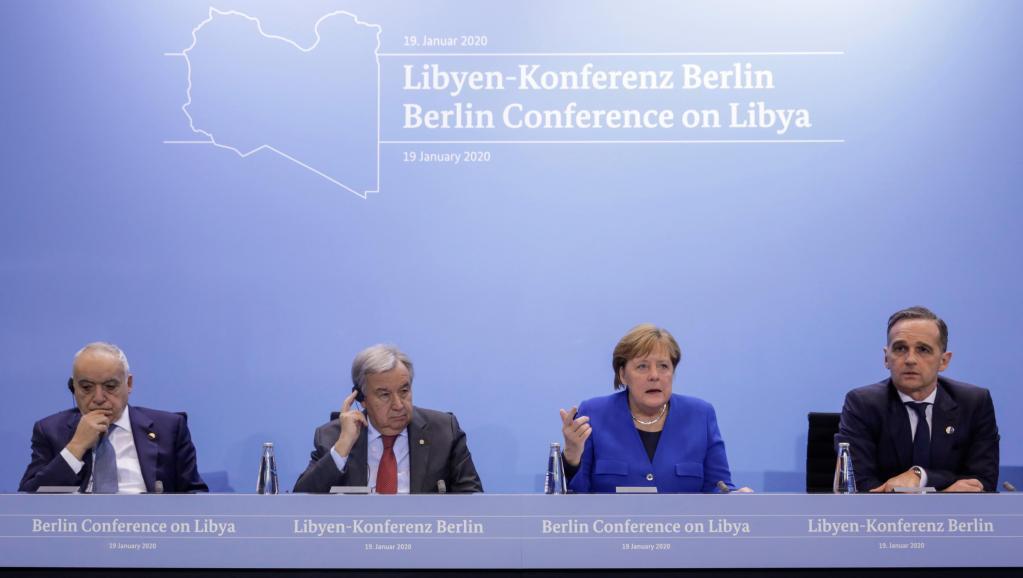
Lors d’une conférence sous l’égide de l’ONU à Berlin, onze pays dont la Russie et la Turquie ont convenu qu’il n’existait pas de « solution militaire » à ce conflit, qui déchire la Libye depuis près de 10 ans, a déclaré la chancelière allemande Angela Merkel à l’issue d’une demi-journée de discussions.
Les participants ont aussi appelé à un véritable cessez-le-feu permanent sur le terrain, qui se fait attendre malgré l’entrée en vigueur le 12 janvier d’une fragile trêve entre belligérants.
Pour s’assurer du respect effectif et durable de la fin des hostilités, des rencontres inter-libyennes entre représentants militaires des deux camps devraient être organisées prochainement. Une invitation sera lancée « dans les prochains jours », a assuré Antonio Guterres, secrétaire général de l’ONU.
Pour la consolidation du cessez-le-feu, l’émissaire de l’ONU avait appelé les deux camps rivaux à former une « Commission militaire » composée de dix officiers, cinq de chaque côté. Cette commission aura pour mission de définir sur le terrain les mécanismes de mise en œuvre du cessez-le-feu.
Respect de l’embargo sur les armes
Les participants sont aussi tombés d’accord pour « respecter » strictement l’embargo sur les armes et que « cet embargo serait plus strictement contrôlé qu’auparavant », a expliqué la chancelière lors d’une conférence de presse commune avec Antonio Guterres et l’émissaire de l’ONU en Libye, Ghassan Salamé. L’embargo a été décrété en 2011 par l’ONU mais est largement resté lettre morte.
« Nous avons assisté à une escalade dans le conflit. Il a atteint ces derniers jours une dimension dangereuse », a en effet fait valoir Antonio Guterres, pointant le « risque d’une véritable escalade régionale ».
Autre point sensible du conflit : les interventions plus ou moins directes de pays étrangers dans ce conflit. « Tous les participants se sont également engagés à renoncer à des interférences dans le conflit armé ou les affaires intérieures de la Libye », a indiqué M. Guterres.
La Turquie soutient en effet militairement le gouvernement de Fayez el-Sarraj à Tripoli et la Russie, malgré ses dénégations, est soupçonnée d’appuyer l’homme fort de l’est de la Libye, le maréchal Khalifa Haftar.
Depuis la reprise des combats entre camps rivaux en Libye en avril 2019, plus de 280 civils et 2 000 combattants ont été tués et, selon l’ONU, plus de 170 000 habitants ont été déplacés.
■ Vu de Tripoli : Un embargo jamais respecté jusqu’à présent
Sur RFI, la semaine dernière, le chef de la mission de l’ONU, Ghassan Salamé, accusait une douzaine d’États d’avoir envoyé des armes en Libye depuis le début de l’année. L’offensive du 4 avril de Khalifa Haftar sur Tripoli a encore accentué les livraisons d’armes qui sont devenues un sport pour les deux parties.
La violation de l’embargo est considérée comme tellement normale en Libye, que l’arrivée des armes est parfois mise en scène. En mai dernier, c’est sous l’œil des caméras que 58 véhicules blindés anti-mines en provenance de Turquie ont fait leur entrée dans le port de Tripoli. Dans le camp de Khalifa Haftar, on n’est pas en reste. En 2017, un navire de patrouille de l’armée irlandaise, estampillé Yacht de loisir par une société des Émirats arabes unis s’est retrouvé dans le port de Benghazi où il a été immédiatement armé de mitrailleuses de 40mm.
Avec l’offensive sur Tripoli, c’est un nouveau type d’armes qui a fait son apparition en masse : les drones. Le gouvernement de Tripoli se fait livrer des drones turcs qui arrivent très souvent par containers dans le port de Misrata. L’autoproclamée armée nationale libyenne de Haftar bénéficie de drones de conception chinoise fournis par les Émirats arabes unis.
Outre les armes, les deux camps font aussi appel à des mercenaires étrangers. Des combattants soudanais ont rejoint les rangs de Haftar grâce à un contrat entre une société canadienne et des dirigeants de Khartoum. À l’ouest, des mercenaires tchadiens ont franchi en toute tranquillité la frontière pour défendre Tripoli. À Berlin, dimanche, le président français Emmanuel Macron a dénoncé la présence de combattants syriens envoyés par Ankara au côté des forces pro-Tripoli.
Chaque année depuis 2011, les experts de l’ONU constatent les violations répétées et flagrantes de l’embargo sur les armes. 2020 ne devrait pas échapper à la tradition.
Notre sélection des informations essentielles. Du lundi au vendredi.
En vous inscrivant, vous acceptez notre politique de confidentialité.