Article
Preparing the article…
If a translation is needed, this may take a few seconds.
If a translation is needed, this may take a few seconds.
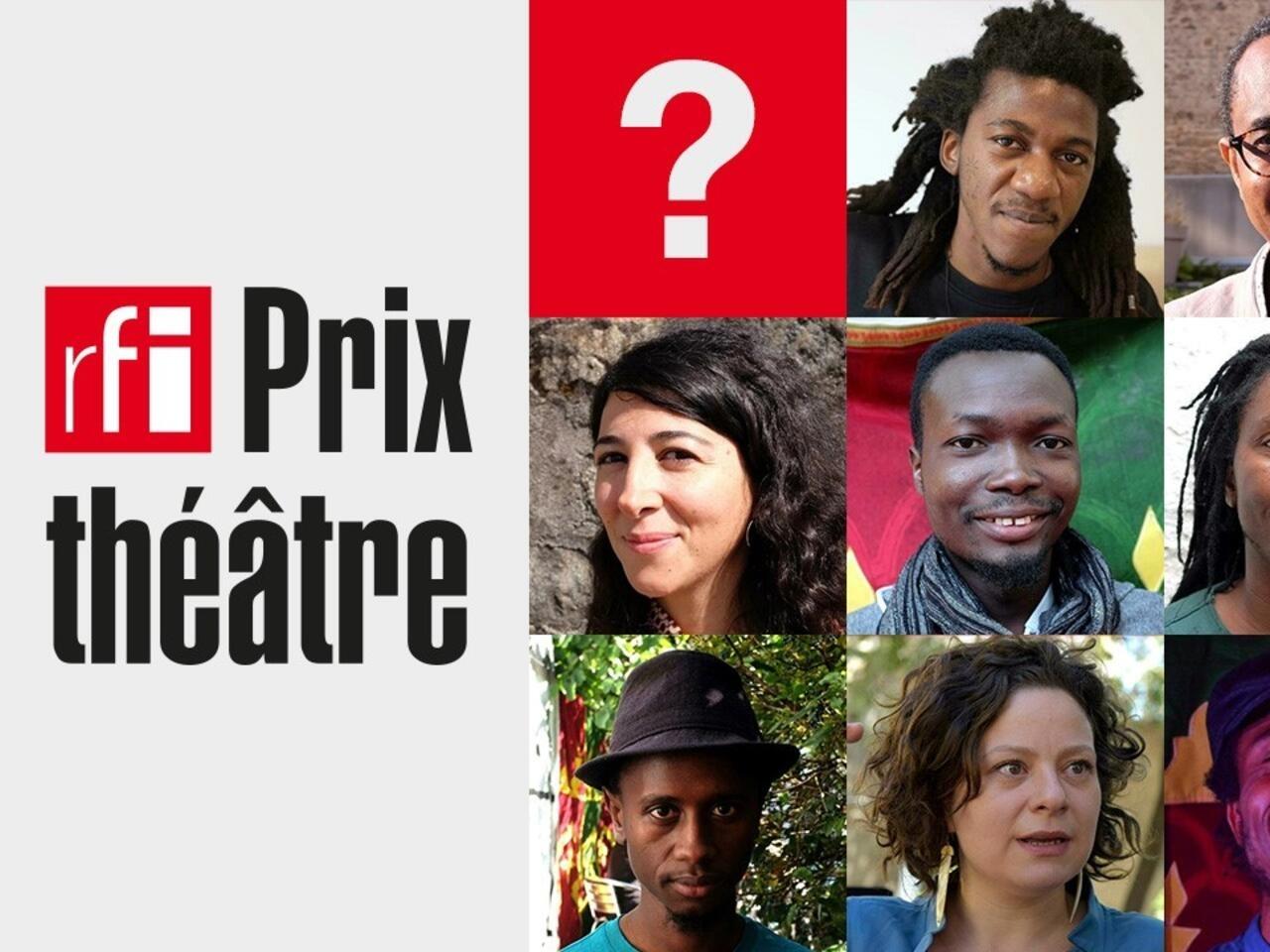
Following the call for entries for the 9th edition of the "RFI Theatre Prize," eleven unpublished texts have been pre-selected for their literary and dramaturgical qualities and their originality. They will be submitted to a vote by a jury composed of artists and professionals, chaired this year by Odile Sankara, Burkinabè director and president of the Les Récréâtrales Festival. The 2022 RFI Theatre Prize will be awarded on Sunday, September 25, in Limoges, as part of the Zébrures d'automne festival.
From Mireille Davidovici, head of the Reading Committee for the RFI Theatre Prize,
"What part of ourselves have we lost in order to endure such violence?" writes one of the authors of the numerous texts received by our reading committee. His question reflects the recurring questions that run through this theatre from the South of the Francophone world, from Africa to the Pacific lands. The answers are of abundant diversity: monologues, dialogued or slammed pieces, realistic or poetic universes, raw or metaphorical... Always political. Far from giving up, here are writers expressing themselves to escape chaos, often keeping indignation at a distance through humour or parody. We salute, for this ninth edition, the female authors now more numerous to entrust us with their texts: more than 15% of the 121 texts coming from 19 countries. So much so that the 2022 harvest nearly achieves parity!
Year after year, new voices rise that never cease to alert; we must listen to them. Often, these writings, still fresh, have not yet been subjected to the scrutiny of voice or staging, and would require adjustments. But the reading committee has given itself the mission of a trailblazer and not a censor, and it is committed above all to revealing the potential of texts and offering visibility to their authors.
Work that bears fruit: some have, since recent editions, found their way to theatre stages thanks, among other things, to the dynamism of this Prize which designates not only a laureate, but distinguishes some ten writers each time. Far from being discouraged, those who are not elected send us their latest work and we thank them for it. The members of the jury and the partners of this literary adventure in mainland France and elsewhere are relays for promoting and bringing to life these writings that shift our perspectives and change our compass. Full of sound and fury, dynamic, they question theatrical forms, divert them, put them out of action...
We have focused on the stories and History that are told to us here with much verbal invention and poetic imagination. Languages are invented and dialogue with one another and our theatrical models are thereby dusted off.
Leave or Suffer, Cyril Juvenil Assomo (Cameroon)
A prison. Two nooses. Three voices: Me, You, and Them. Me wants to end life to find freedom, You doesn't want to follow and prevents her from killing herself... Them: the jailer, organizes a purge to rid the world of these slaves become useless. When Me tries to hang herself again, the rope breaks...
In tense dialogue, a situation with no way out, but where the instinct for life prevails.
Port-au-Prince and its sweet night, Gaëlle Bien-Aimé (Haiti)
Night. A couple makes love with passion. Outside, Port-au-Prince deploys an unsettling silence. In imagination, they revisit the city and the neighbourhoods that witnessed the birth of their love, in times equally troubled. He sees horrors at the hospital where he works. She plans to leave to live her life as a writer... On this last night, he begs her to go: "I don't want the woman I love to be planted in my ruins." The ocean cannot separate them.
In seven sequences, and under this ironic title, the anguish of a couple on edge in an unbearable city...
Don't be surprised if my letter smells of salt, Jocelyn Danga Motty (Democratic Republic of the Congo)
Throughout his journey as a migrant, a man writes to his little brother. One letter at each stage, from Brazzaville to Paris via Tripoli, shipwreck at sea, Greece, Italy... He tells him of the difficulties of this perilous adventure from which he emerges victorious. Between the letters, dialogues prompted by his encounters or laconic reflections bring the narrative to life.
In this moving one-way epistolary relationship, the little brother remains the older brother's port of call.
I will return with the wind, Basma El Euchi (Tunisia)
A woman has died in her apartment. Her voice. She tells: her exile at age six, her country destroyed, the smells and lights of her childhood... Discovering the corpse, the son, returning after months of absence, calls his father who wants to dispose of the body quickly, erase his origins, while the mother wished to be buried in her country. The ghost woman mixes her commentary with their dialogue... The son is caught between a rock and a hard place.
Mixed voices between reality and the supernatural, a dialectic of exile is played out here: forced integration for the father, nostalgia for the native land for the deceased...
A woman to mend, Sandra Élong (Cameroon)
Civil war rages. Katamba refuses to give birth. She does not want to bring a daughter into the world: a child of rape, she would suffer the same fate as her. Katamba prefers to die and damns the two humanitarians at her bedside. Wendy, a doctor, urges her to give birth and Katanga, a journalist, prefers to flee as soldiers advance "tearing women apart." The woman in labour tells us her sad story and her anger, accompanied by a chorus of voices from the depths of the forest.
Katamba symbolizes the thousands of women of Kivu, raped and devastated. Her muffled anger lashes out at the useless compassion of humanitarians, the fascination of journalists with horror and the indifference of political personnel...
The wild shadows, Djevens Fransaint (Haiti)
Samuel says goodbye to Dragonfly. He leaves to make his fortune elsewhere and promises the young girl a better life. A corrupt cop, Apo, in love with Dragonfly, drives the young man to suicide by stealing his passport. Pile, a kind of clown puppeteer, picks up Samuel's body, but the corrupt cop catches up with him and accuses him of being responsible for this suicide. Dragonfly, a few years later, in a brothel where she works, will take revenge on Apo...
Offset from realism, the piece depicts with cruelty the mechanisms of violence.
The Lake, Djo Kazadi Ngeleka (Democratic Republic of the Congo)
What happened at the lake? There is a crowd and "it's telling." Indefinitely... Among the people who speak and bustle about, an old man and a young man begin a political debate on the history of Congo, while gossip is rife... This lake, centre and subject of palavers, is the place of all hearsay and rumours.
A fine energy emanates from this abundant language...
Aomby, Gad Bensalem (Madagascar)
Once upon a time there was a fabulous bird that would have abducted the king's favourite son by literally tearing him from his mother's breast and gouging out the king's eyes... Enough with legend: we follow the journey of a teacher, travelling to the south of the country, to take up his position. Kidnapped by highwaymen, he finds among them one of his cousins, who recruits him into his gang. He will become a cattle thief. His second cousin is no better as a corrupt deputy.
Legend and reality combined account for a society divided and bewildered by the incompetence of a State, like the king blinded by the bird of legend.
Collateral, Fatoumata Sy (Côte d'Ivoire)
The son fled the country and the diamond mine, the village's only resource. He hopes for a better future than his father, worn out by years in the mine. His sister, who remained in the village, refuses the advances of the all-powerful mine owner and falls in love with the village gravedigger. She will pay dearly for it. Father and mother are offended by this mésalliance. When the son returns, his sister is dead.
Between the village and the land of exile, present and past, a family and social drama unfolds.
The copper eaters, Bibatanko (Democratic Republic of the Congo)
In Coppertown, copper and cobalt are extracted. A miner, Amani provides for his wife and two children through his hard work. But, victim of an accident, he returns disabled to his family. The mother, now a businesswoman, keeps the pot boiling. Amani cannot bear his physical impotence and his wife's independence... The children suffer the effects of this upheaval.
Choruses from different communities put the action in perspective and anchor it in a social and economic reality.
Bizarroid, Jean-Paul Tooh-Tooh (Benin)
We are in a country where hunger arrives in each home and opens fire. The survivors scatter. Some throw themselves onto the road of exile. Others offer their chest to death. This is the case of Djibril, who enlists as a mercenary to fight alongside the Ukrainians, less out of conviction than to feed his family with contract money. As he prepares to embark despite his wife's protests, he lives, in a dream, the horrors of war.
Oneirism and reality intersect to produce a text for peace.
► Also read: Haitian Jean D'Amérique, winner of the 2021 RFI Theatre Prize for "Dust Opera"
Our editors' picks of what matters. Monday to Friday.
By subscribing, you accept our privacy policy.