Article
Preparing the article…
If a translation is needed, this may take a few seconds.
If a translation is needed, this may take a few seconds.
Africa had 3,924 confirmed cases of coronavirus reported in 46 countries on Saturday, March 28. COVID-19 has already claimed the lives of 117 people (116 in Egypt and 1 in South Africa), according to the Africa Centres for Disease Control and Prevention.

On foot, by bicycle, hundreds of Malagasy people have been fleeing the capital Antananarivo for several days to take refuge in the countryside. On national road 7, a checkpoint has been set up and the temperature of Malagasy people is being checked, according to health authorities. Similar scenes of flight are occurring in Kenya where a night curfew has been imposed. Kenyans are storming collective minibuses to move away from major cities.
Saturday morning, in front of a Johannesburg supermarket, South African police dispersed a crowd that was not respecting social distancing guidelines. President Cyril Ramaphosa has declared an unprecedented three-week lockdown in his country, the most affected in Africa by COVID-19. The government has banned the sale of alcohol and cigarettes during this period. Walking a dog or jogging are also prohibited. The authorities have also planned an aid package so that banks can borrow and lend more easily. But the Moody's agency has just downgraded its rating for South Africa.
► Also read: South Africa: Moody's warning shot
In turn, Ghanaian President Nana Akufo-Ado announced on Friday, March 27 on television containment measures in two regions. Traffic will be restricted as of Monday, March 30 in the Greater Accra metropolitan area as well as in the Greater Kumasi metropolitan area for two weeks. Only trips to purchase essential items are authorized.
In Lagos, Africa's most populous city, time is suspended. Markets and streets are deserted, the bustling megacity has come to a standstill. The authorities have called on Nigerians to stay home. Schools, public places, and non-food businesses are closed. Trains are at a standstill, international airports as well. The challenge for Africa's giant: convincing 200 million people to stay at home.
In Senegal, the Ministry of Health reports 11 new cases of coronavirus. Seven patients are, however, healed and about to leave the hospital facilities where they had been placed in quarantine. One hundred twelve infected people are still undergoing treatment. No deaths have been recorded to date.
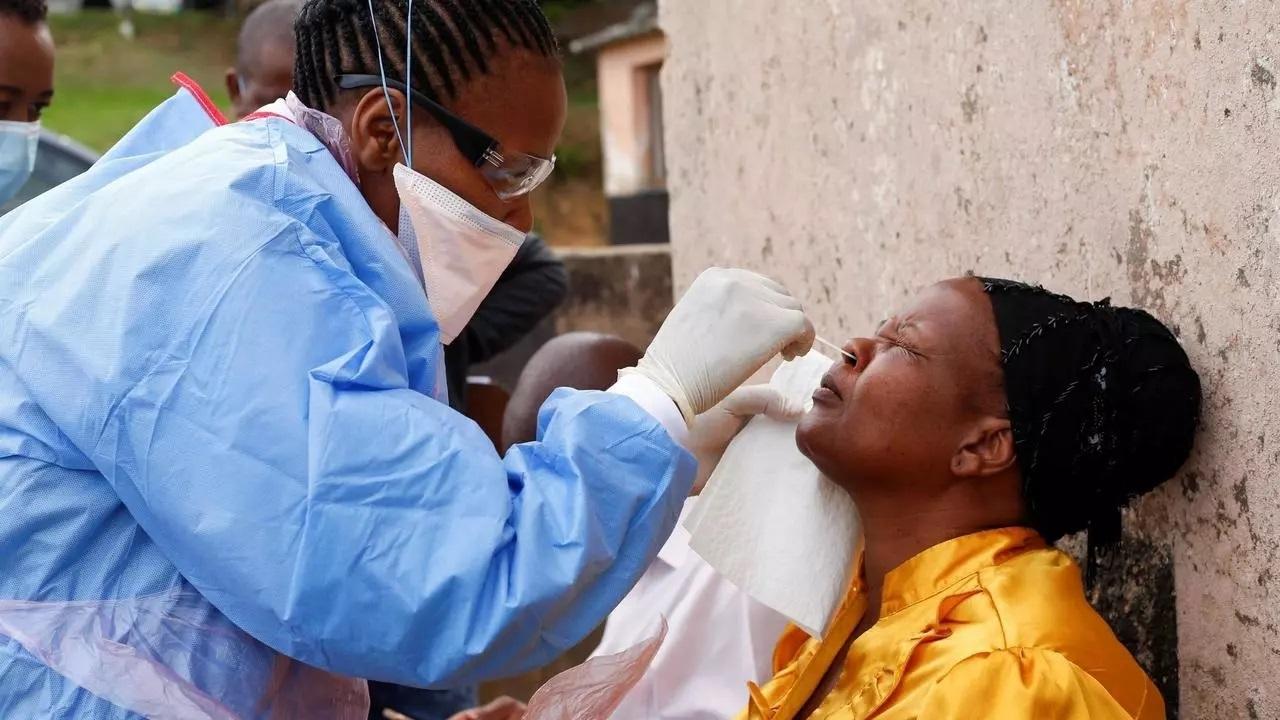
In Cameroon, the Ministry of Public Health announced Saturday the launch of a prevention and testing campaign for the COVID-19 virus in Douala, the economic capital of the country. A ministry statement explains that community health agents will go "into households" from April 2 to 7. Their mission will be to inform the population about prevention measures, "to identify at-risk people", says the statement, and to submit them to a test to determine whether or not they are carriers of the virus.
Moussa Faki Mahamat announced Saturday that he tested negative for the new coronavirus. He is observing a two-week quarantine after a member of his team contracted the virus. "Let us remain mobilized as the war in Africa against COVID-19 is only beginning", wrote Moussa Faki Mahamat on his Twitter account.
A team of Chinese doctors arrived Friday in Algiers. In total 21 people with respirators and protective equipment, masks and testing kits. The Algerian authorities welcome "this proof of brotherhood". The two countries maintain close commercial relations. The main hotspots of the pandemic in Algeria are the Blida region, under total lockdown, and Algiers, partially confined and where a curfew has been imposed.
Niamey declares a state of health emergency and imposes a curfew in the Niger capital in the face of the advance of COVID-19. President Mahamadou Issoufou announced last night the release of 1,500 detainees.
► Also read: Coronavirus in Niger: authorities announce a curfew in Niamey and numerous sentence reductions
Mauritania's Interior Minister announced Saturday morning the ban on traffic between regions of the country, except for medical teams, heavy goods vehicles transporting merchandise, and special teams responsible for water, electricity, and telecommunications services. The measure takes effect Sunday from 12:00 UTC. Mauritania has already closed its schools, universities, and its land, maritime borders and airspace to commercial flights.
NewsletterWith the Daily Newsletter, find the top news directly in your inbox
Our editors' picks of what matters. Monday to Friday.
By subscribing, you accept our privacy policy.