Article
Preparing the article…
If a translation is needed, this may take a few seconds.
If a translation is needed, this may take a few seconds.
"Yesterday, reports the daily Enquête in Senegal, during the daily briefing on the coronavirus situation, the Ministry of Health and Social Action reported 8 new cases out of a total of 608 tests, including two imported cases." Senegal, then, is one example among others…
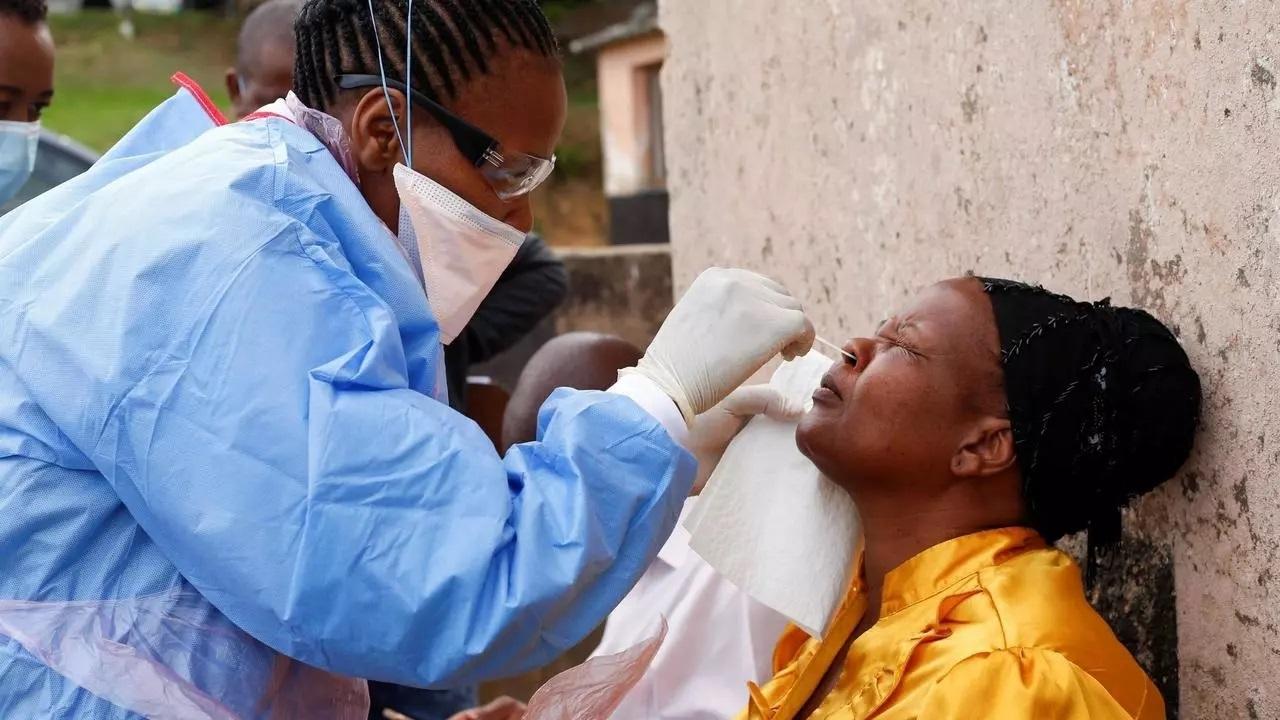
"Yesterday, reports the daily Enquête in Senegal, during the daily briefing on the coronavirus situation, the Ministry of Health and Social Action reported 8 new cases out of a total of 608 tests, including two imported cases."
Senegal, then, one example among others of low contamination rates.
And globally, the pandemic on the continent has not had the devastating effects that some predicted.
This is what Le Monde Afrique notes: "on the world map of the pandemic, Africa continues to stand out. While neighboring Europe appears once again overwhelmed, the number of known contaminations there is comparable to that of France. More than nine months after Covid-19 appeared on the continent, 1.95 million cases have been reported, or less than 4% of cases recorded worldwide while the continent accounts for 17% of the planet's inhabitants."
True, Le Monde Afrique continues, "questions about the reliability of the figures have not disappeared, justified by the low level of testing – fewer than 20 million people tested in total. Nevertheless, no country has observed spikes in excess mortality that it could not explain, which might suggest virus transmission remained under the radar. Week after week, health infrastructures, despite their general insufficiency, have managed to cope. And the catastrophic predictions of the early days have not materialized."
West and Central Africa lightly affected
In fact, Le Monde Afrique further clarifies, "the geography of the epidemic has shifted and it is in the north of the continent, Morocco and Egypt leading the way, where it is progressing most rapidly today. South of the Sahara, Kenya is also facing contamination levels higher than those in summer. Here and there, a new lockdown is even being considered. South Africa, which accounts for more than 40% of diagnosed cases on the continent, has not relapsed but there too concern persists."
Apart from the northern, southern and eastern sides, the continent appears to be spared. Example in Cameroon, as explained, still in Le Monde Afrique, by the director of the Pasteur Institute in Yaoundé, Elisabeth Carniel: "very few people have had to be hospitalized. Few have died. The occupancy rate of Covid beds is 1%. Lockdown was little respected and today, everyone goes to church or participates in sporting gatherings without wearing masks. Something has protected the population. What exactly? I don't know."
So how to explain this resistance to the virus? According to WHO, Le Monde Afrique notes, "the early reaction of governments in managing the new coronavirus, the mastery of testing and tracing methods in a region accustomed to managing recurring contagions constitute the decisive element to explain the continent's singular evolution. Even if WHO does not rule out other often-cited hypotheses: a high proportion of young people in the age pyramid, Africa's low insertion in major international mobility routes, or even better resistance of populations acquired through regular exposure to viruses…"
Mo Ibrahim Index 2020: a concerning assessment
Also on the front page, good governance declining on the continent…
For the first time in ten years, the Ibrahim index of governance in Africa notes a deterioration in the situation. "Its publication is awaited each year, notes Jeune Afrique, if only to know who were the good and bad students of the past year. The Ibrahim index of governance in Africa, produced by the foundation of Anglo-Sudanese billionaire Mo Ibrahim, has become an institution."
Bad surprise then: "for the first time since the Mo Ibrahim Foundation has been working on this task, the overall state of governance in Africa is in regression. Since 2010, Jeune Afrique specifies, in the four major categories selected (namely: participation, rights and inclusion; security and rule of law; human development; foundations of economic opportunities), the situation had continued to improve. Since 2015, however, this progression had slowed. And in 2019, a decline in the average score was observed for the first time, affecting three out of four categories (only 'economic opportunities' are spared). (…) At the top of the ranking, that is, on the side of countries where rights and legality are best respected, we find Mauritius, followed by Cape Verde, Seychelles, Tunisia and Botswana. South Africa, Morocco, Senegal and Rwanda are not far behind, Niger, Mali and Gabon navigate in the middle of the ranking, while the three Guineas and the two Congos are relegated to the bottom of the class, ahead of the trio that brings up the rear: Eritrea, South Sudan and Somalia."
Our editors' picks of what matters. Monday to Friday.
By subscribing, you accept our privacy policy.