Article
Preparing the article…
If a translation is needed, this may take a few seconds.
If a translation is needed, this may take a few seconds.
This innovative technology promises to reduce agricultural losses and open new markets for African farmers.

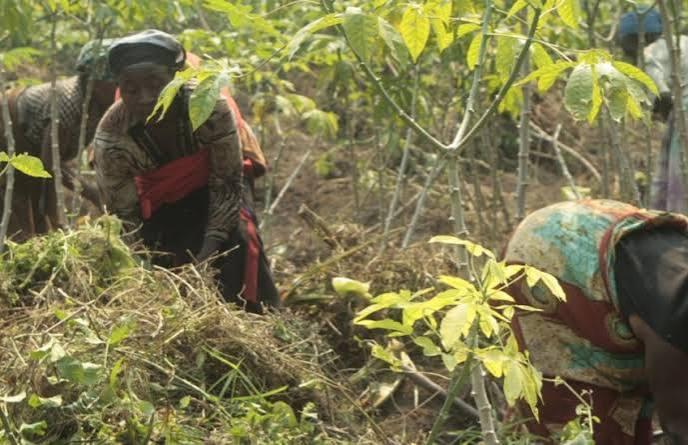
In the vibrant heart of Africa's rural areas, a silent revolution is underway. Farmers, faced with devastating post-harvest losses, are finding in solar energy refrigerated storage a sustainable and promising solution. According to a report from Africanews, this technology could transform the way perishable goods are preserved on the continent, providing a lifeline to smallholders often left behind by traditional infrastructures.
In sub-Saharan Africa, where nearly 50% of fruits and vegetables are lost after harvest according to the FAO, the need for an effective solution is urgent. Electrical infrastructures are often non-existent or unreliable in rural areas, making it difficult to preserve fresh products beyond a few days. Solar refrigeration storage thus emerges as a viable and affordable alternative, allowing not only for the reduction of these losses but also for optimizing sales by accessing more distant markets.
Behind a Necessary InnovationThe idea of solar-powered refrigerated storage is not new, but its application in Africa is now making sense thanks to technological advancements and the decreasing costs of solar panels. According to HEIFER International, which recently launched a pilot program in Zambia with CaaS (Cooling as a Service), this model offers small farmers and cooperatives the opportunity to access refrigeration infrastructure without bearing the prohibitive costs associated with electricity or fuel supply.
For these rural communities, this means not only extending the shelf life of agricultural products but also improving their market quality. "This system will not only limit food waste," explains a representative of HEIFER in a recent interview, "but also improve farmers' incomes by giving them access to markets that were previously out of reach."
The Economic Argument No Longer HoldsEconomically, the potential impact is considerable. By reducing post-harvest losses through solar refrigerated storage, farmers can increase their incomes by up to 30%, according to some estimates cited by RFI. This also has a multiplier effect on the local economy as these additional gains can be reinvested in the purchase of improved seeds or in crop diversification.
Historically, African agriculture has always faced several major structural challenges. From the colonial era, when it was primarily oriented towards raw export without significant local added value, to the present day, where it must contend with growing domestic demand while remaining competitive on the international stage; each step has been marked by various obstacles ranging from a lack of adequate technical means to a lack of genuine political will to encourage innovation in the sector.
A Response to Structural ChallengesThe adoption of solar refrigeration storage fits into a broader context where several initiatives aim to improve the African agricultural sector. For example, we documented in May 2021 the initiative "one million silos" led by the FAO for West Africa Sahel aimed at improving grain storage. This approach could effectively complement current efforts in solar refrigeration preservation.
However, despite the numerous potential advantages, this technology still needs to overcome certain obstacles before widespread adoption, including the high initial cost of equipment in some very poor communities, as well as the crucial need for adequate training to ensure optimal operation.
Towards a Sustainable FutureNevertheless, as global demand for fresh products increases exponentially with a growing population seeking healthy and diverse food year-round — including off-season — it seems inevitable that this technology will soon play a key role, which could be described as nothing less than a radical transformation of the agricultural sector on our continent.
From a social perspective, the introduction of systems like these also represents an opportunity to strengthen community cohesion through the creation of local jobs for maintenance and management of equipment; while it also contributes to the empowerment of women, who are often primarily responsible for post-harvest tasks. Thus, while there is still much to achieve before it becomes commonplace wherever useful or necessary among us Africans, it is clear that it is already positively contributing to changing the game where it is implemented, as it continues to gain ground every day. A tangible hope finally emerges on the horizon of our long-neglected countryside!
Our editors' picks of what matters. Monday to Friday.
By subscribing, you accept our privacy policy.