Article
Preparing the article…
If a translation is needed, this may take a few seconds.
If a translation is needed, this may take a few seconds.
At least 132 dead in central Mali, this is the official toll of the attack carried out this weekend in several villages in the municipality of Diallassagou, Bandiagara region. Bamako has decreed three days of national mourning and called for « the communion of hearts and minds in the face of…
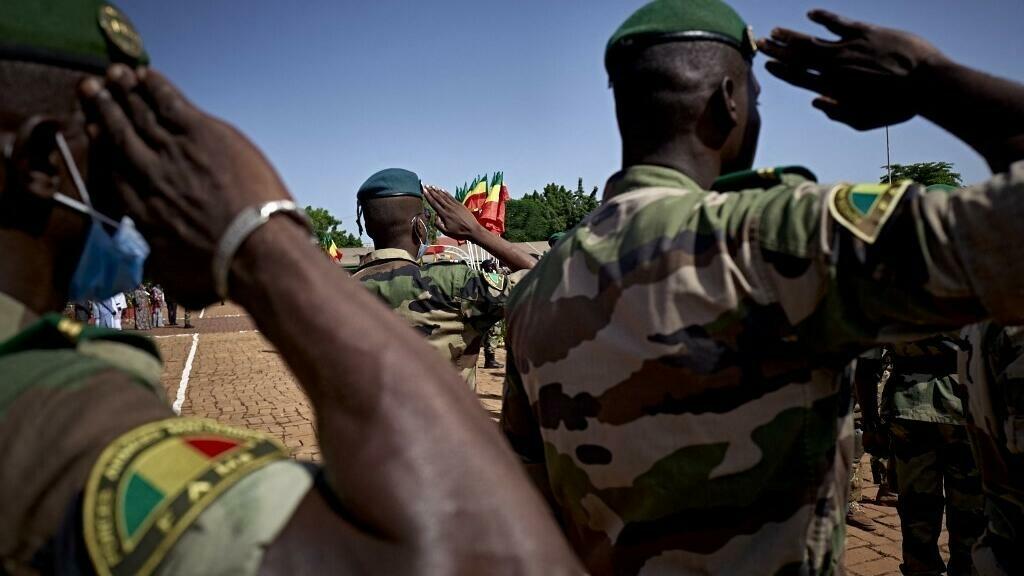
All political formations that have already reacted, regardless of their affiliation, bow before the memory of the victims and call for national cohesion, for unity. But this new carnage also raises questions about Bamako's military strategy. Questions raised mainly by opposition parties. The Cadre, which brings together these opposition parties, points to « the increase in tensions and the resurgence of attacks » in different parts of the territory. The Codem, a member of this Cadre, even asks the authorities to « put an end to all ephemeral triumphalism. » An allusion to the official discourse of the transitional authorities which, for months, have been touting the « buildup of the Malian army », the « villages liberated » by the « valiant Fama », against terrorists « increasingly agitated », « in disarray », and whose attacks are described as « desperate attempts. »
Yet the Malian army has considerably increased its counterterrorism operations since last January, essentially in the Centre, and with reported tallies (jihadists killed, equipment recovered) that are very impressive. But many residents of the affected areas and security sources doubt the reliability of these tallies. Human rights organizations also assert that among the army's victims, there are in fact a huge number of civilians.
► Also read: Mali: jihadist massacre in Diallassagou
The most emblematic case is the operation carried out in Moura, at the end of March, with 203 people killed in the village, all presented as terrorists. A Minusma report moreover pointed out, with figures to back it up, the exponential increase in civilian victims of the Malian army three weeks ago, which had sparked the anger of the transitional authorities who had felt this was an attempt to tarnish the image of the national army.
The Diallassagou carnage is not an isolated case. While the war against terrorism is not won in a few months, Diallassagou has come to highlight the general deterioration of the security situation. Smaller-scale terrorist attacks are almost daily against the armed forces and against civilians. And for more than three months, the Sahel branch of the Islamic State group has been massively targeting civilians in northeastern Mali: estimates speak of 300 to 500 dead in the Ménaka region. Several political parties, and many community leaders or armed groups from the North, have moreover noted with astonishment that a national day of mourning was decreed after the Diallassagou massacre, in the Centre, while on the Ménaka killings the authorities' silence is complete.
No national mourning, not even a statement: a double standard that raises questions, to say the least, about the authorities' vision of the country's security priorities and about their vision itself of the different parts of the territory.
Our editors' picks of what matters. Monday to Friday.
By subscribing, you accept our privacy policy.