Article
Preparing the article…
If a translation is needed, this may take a few seconds.
If a translation is needed, this may take a few seconds.
In Rwanda, women remember the post-genocide period with difficulty. Often alone, in destitution, they had to continue living. Some organize themselves in small groups to work together. This is the case in the Muhanga commune where, from 1996 onwards, Irène Muyawezu creates a women's group that makes…
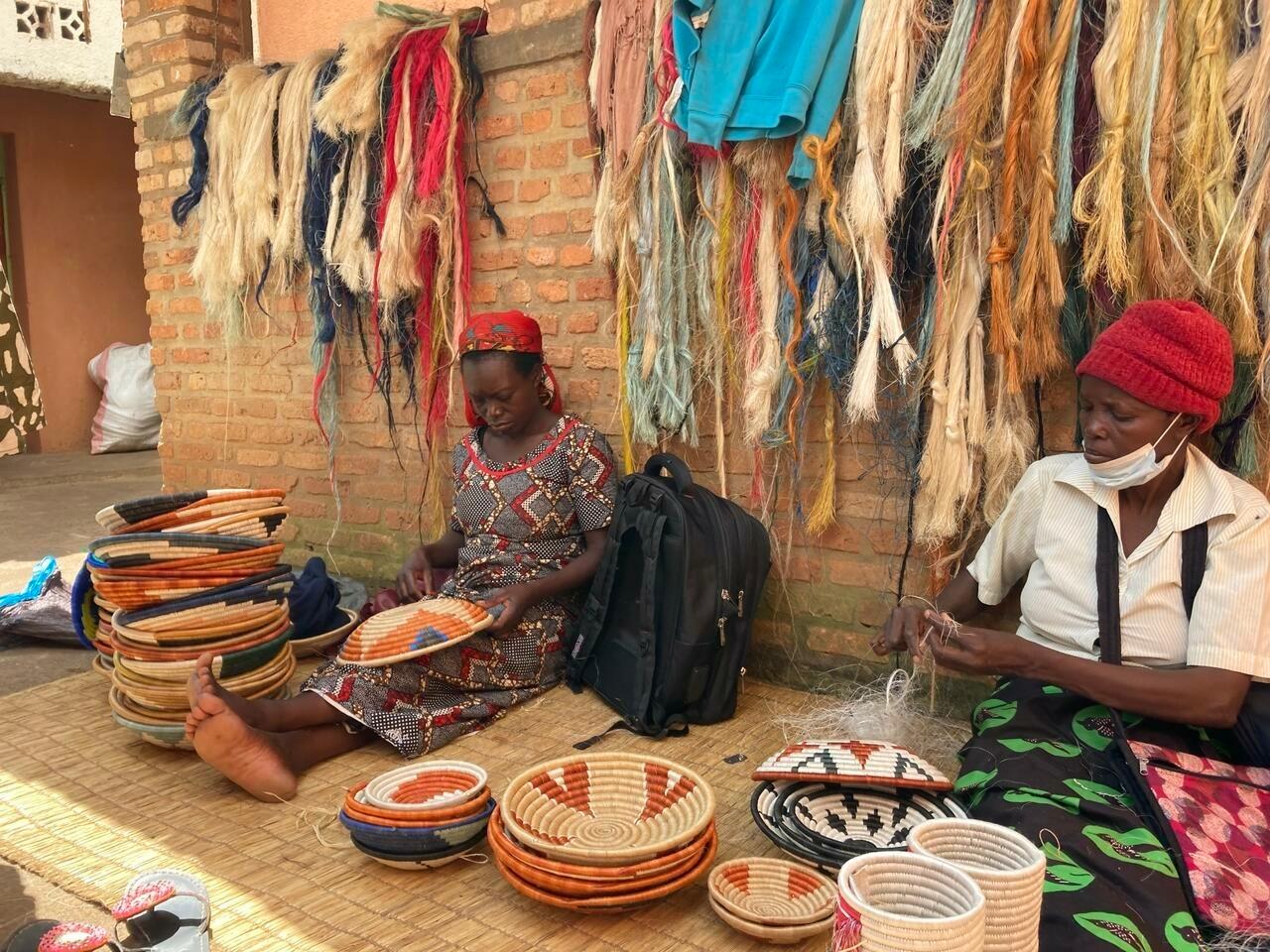
Liberata Kayitesi, wearing an orange cloth adorned with birds, makes baskets and other objects from raffia. "We start from the center. We use a needle and hard herbs to make a durable object. It takes three days to make this basket."
After the genocide, many Rwandan women found themselves alone having to support their households. "The survivors had nothing to eat, it was difficult to dare go to the fields. Some no longer had husbands, others had their husbands in prison. And those whose husbands were present, they were poor. It was very difficult to sit with those whose loved ones killed yours. And they probably thought that you had their loved ones locked up. It was difficult to feel comfortable in the company of others. But after we started, this feeling gradually dissipated."
Liberata Kayisi is also the cooperative's accountant. Working in a group has significantly improved her income.
"Before, I did the same activity, but it was not profitable. When I joined the cooperative, it allowed me to earn more money and it gave me better exposure. It gave me a certain stability in my household. I was able to pay my children's school fees, but also health insurance. And at the same time, being in a group improved my life. When I am alone, I think a lot about the past, but when I am in a group, it gives me a lot of strength."
Now, the cooperative works for different suppliers. "It gives us the opportunity to supply the market. A single woman could not meet this demand. Together we produce in sufficient quantity and on time."
No question of dragging on then. About a dozen women weave in the shade, but in a friendly atmosphere. "We talk a lot. We help each other a lot. After the genocide, everyone stayed in their corner. We women were really poor. Coming together allows us to earn our living, but it also helps us heal."
"It is very precious."
Our editors' picks of what matters. Monday to Friday.
By subscribing, you accept our privacy policy.