Article
Preparing the article…
If a translation is needed, this may take a few seconds.
If a translation is needed, this may take a few seconds.
Tunisia is an open-air museum, its territory covered with remains difficult for authorities to protect. An archaeological heritage threatened by treasure hunters. They are numerous in the impoverished countryside of the country, hoping to make the discovery that will make them rich. From our correspondent in…
From our correspondent in Jendouba,
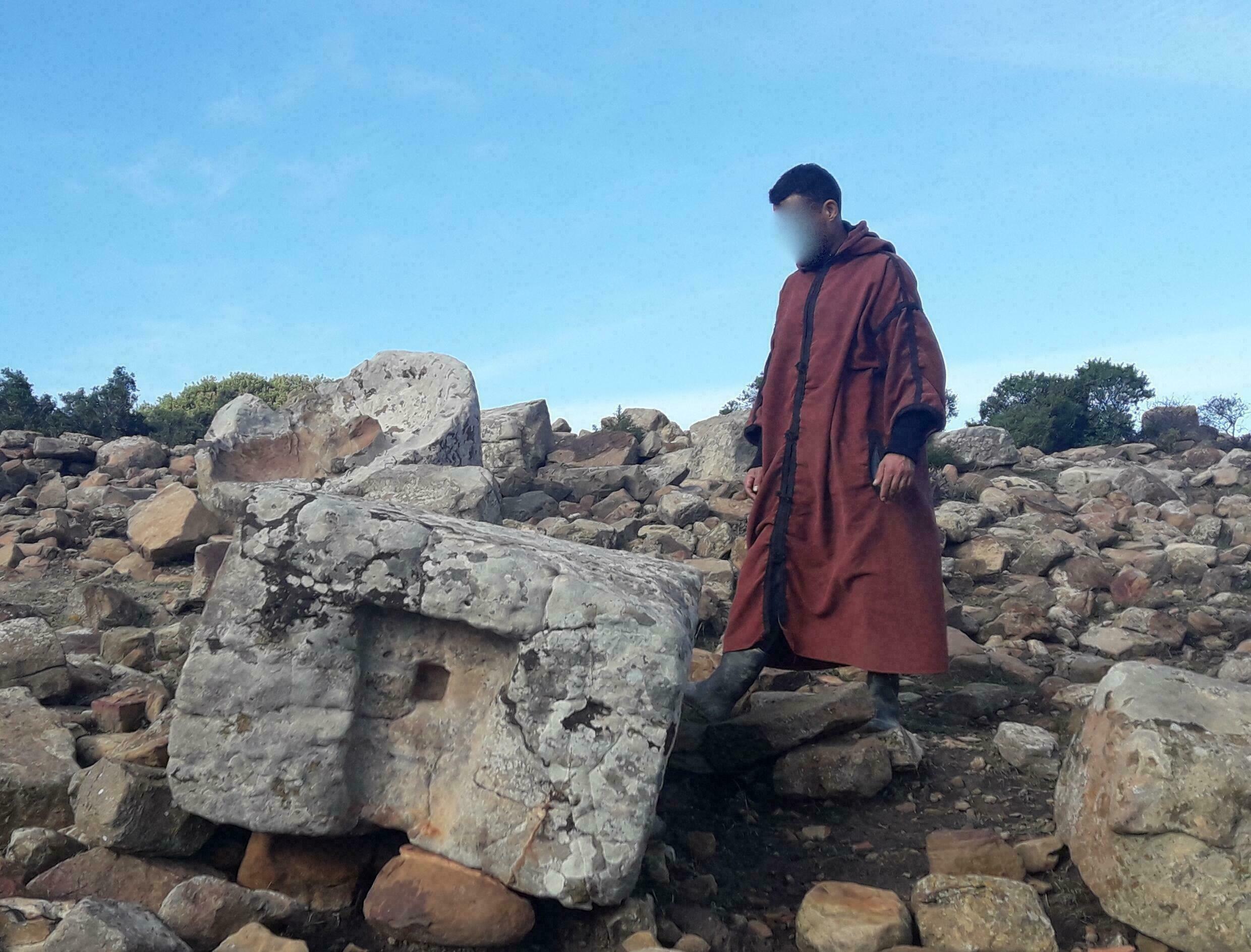
As night falls, lights come alive on the hills, around the village of Balta. A torch in one hand, a spade in the other, Nabil abandons his barber's scissors at dusk… "What sells is gold, diamonds. There are many people who buy on the black market, there are intermediaries," he explains.
Nabil has been searching for treasures for 15 years. To know where to dig, he lets himself be guided by the signs that, according to him, the inhabitants of the region would have left in antiquity. He points to an engraving on a rock. "It's the drawing of an eye, and just below it there is water. They say that the path of the water drop indicates the location of the treasure. These cracks, they are not natural, you have to follow them," Nabil says.
► Listen also: Tunisia: archaeology in the service of education
The method is esoteric, the damage caused to archaeological sites is very real. "The statuettes, they represent a lot of problems, it's too risky. You have to either hide them or break them, there's no other solution," he says.
In the zone, the poverty rate is one of the highest in Tunisia. The fantasy of becoming rich obsesses the looters.
Sometimes the authorities do get ahead of clandestine diggers. Moheddine Chaouali is in charge of archaeological research at the National Heritage Institute. Between the graves of the small cemetery of Bou Salem, he retraces the same path as last November… when a treasure was discovered.
A jar that contained more than 2,700 bronze coins. "Either it's an individual tomb of a wealthy person from the region, or it's a cache made by a peasant, because there were many threats at that time, during the second half of the 4th century," explains Moheddine Chaouali.
► Listen also: Tunisia: 3,000 years of splendors and marvels
Contacted by the town hall and the national guard, the archaeologist was able to intervene quickly to save this page of Tunisian history. "Clandestine excavations happen almost every day. There is considerable effort to preserve major sites, but in the hinterland, in rural areas, it's impossible to put guards everywhere," Moheddine Chaouali admits.
Despite lack of resources, there are regular arrests. But the problem is endless, one clandestine digger is always replaced by another.
Our editors' picks of what matters. Monday to Friday.
By subscribing, you accept our privacy policy.