Article
Preparing the article…
If a translation is needed, this may take a few seconds.
If a translation is needed, this may take a few seconds.
Tunisia appeals to the IMF to face the 'wall' of debt. Its Finance Minister is in Washington this week to begin discussions with the Fund in an explosive health and social context. In Tunisia the vaccination campaign is still in its infancy and hospitals, overwhelmed,…
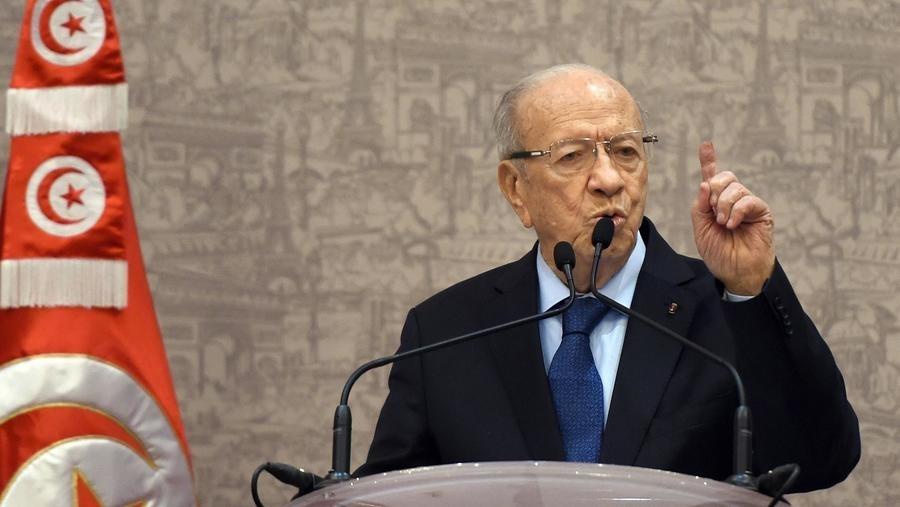
In Tunisia the vaccination campaign is still faltering and hospitals, overwhelmed, are nearing oxygen shortages. But the Prime Minister believes his country cannot afford the luxury of a new lockdown to stem this third wave of contamination. Because the economy is in disarray, public finances in distress. The industries providing jobs and foreign currency, tourism, textiles, have been decimated by the lockdown imposed on the entire world for just over a year. As a result, social spending has soared and tax revenues have plummeted. The 2021 budget deficit triples compared to the previous year, representing 11.5% of GDP and debt now represents 100% of gross domestic product.
It is a medium-term threat. This year the government must repay at least one billion dollars to the United States. The deadlines will be much higher in the following years. The higher the 'wall' of debt rises and the closer it gets, the more urgent it is to act. Some experts lean toward debt cancellation or restructuring. The government dismisses this option because its effects on a middle-income country are quite negative. It delays its return to the market and Tunisia absolutely needs to raise funds to finance its development. The multiple international aid packages granted over the past decade have not been sufficient. The interior of the country still suffers from chronic underdevelopment, unemployment now affects nearly 2 out of every 5 workers. After obtaining a payment facility of 750 million dollars from the IMF in 2020, as part of the pandemic response, Tunisia is now requesting a much larger increase: 4 billion dollars. To balance its budget and break out of the debt spiral.
The IMF, headed by Bulgarian Kristalina Georgieva, is no longer the one from the 1980s obsessed with drastic cuts in the countries it supports. But its principles have not changed. It only lends to countries that agree to programs of drastic savings. Cutting food or energy subsidies for example, its experts suggest, but while preserving targeted aid for the poorest. The IMF also demands cuts in public sector wage spending, these expenses represent more than 17% of GDP, one of the highest levels in the world; for comparison, France, a country with a large public sector, devotes 13% of its GDP to civil service salaries.
A contract that was reached with the UGTT. The main union accepts the downsizing in the public sector, but it remains opposed to any privatization. This is the third demand of the IMF. Because Tunisian public enterprises are also heavily indebted and uncompetitive. These Fund demands are not very original, they were already on the roadmap of the program launched in 2016, but the twists and setbacks of the multiple crises Tunisia has gone through have sidelined them. These demands are coming at the worst possible time. Today the Tunisian government, facing a new political crisis, must simultaneously save lives and impose a purge on its administration while avoiding impoverishing the most vulnerable. Tunisians are giving themselves two months to reach a solution with the IMF, an agreement that is effective for public finances and as painless as possible for the population.
Our editors' picks of what matters. Monday to Friday.
By subscribing, you accept our privacy policy.