Article
Preparing the article…
If a translation is needed, this may take a few seconds.
If a translation is needed, this may take a few seconds.
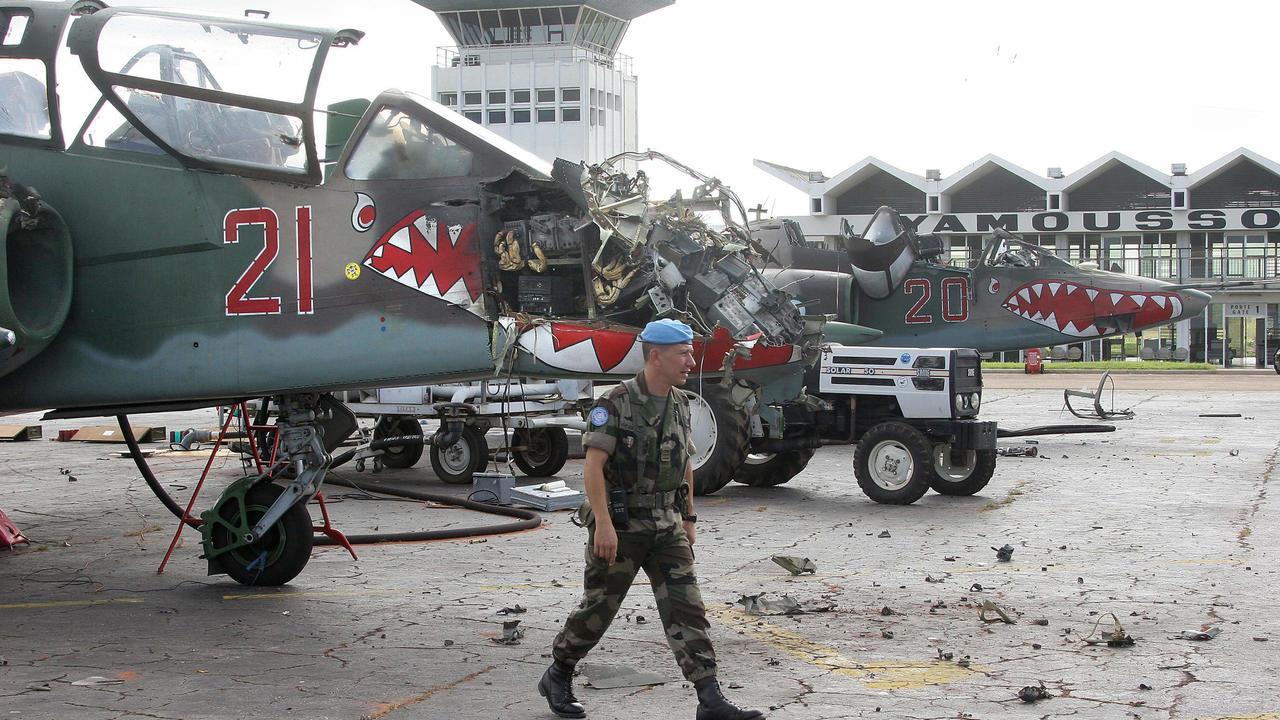
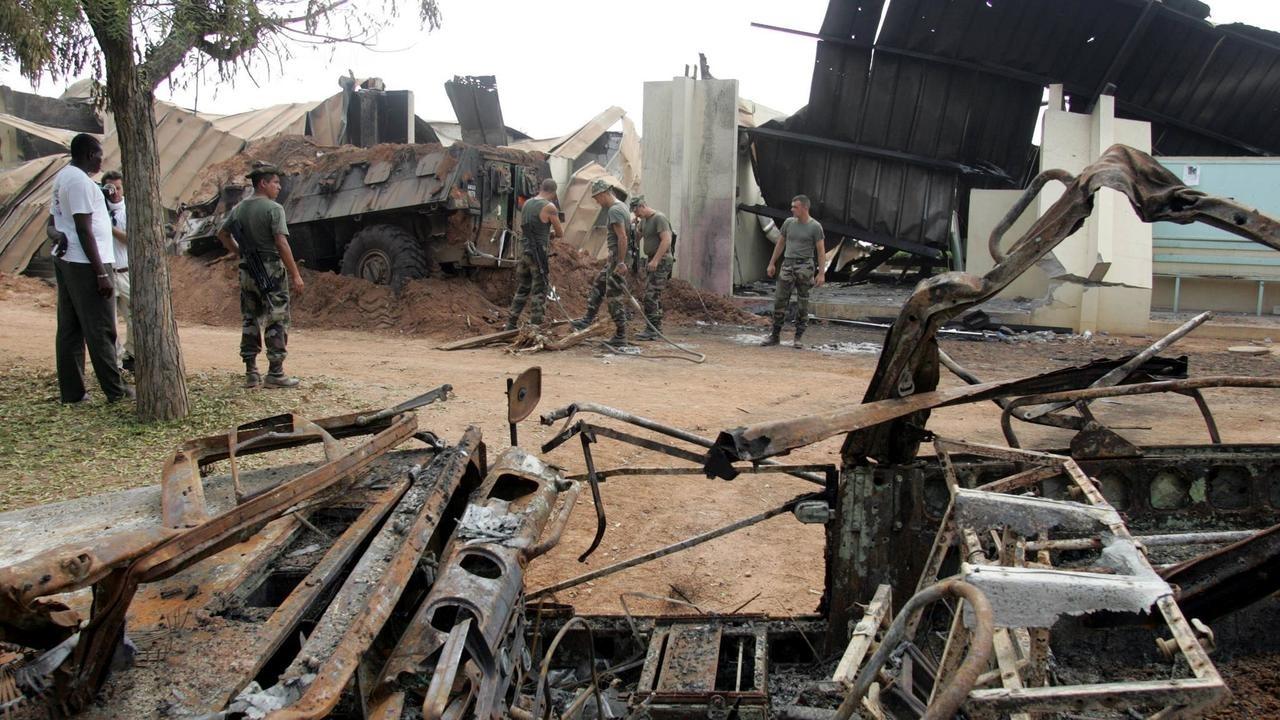
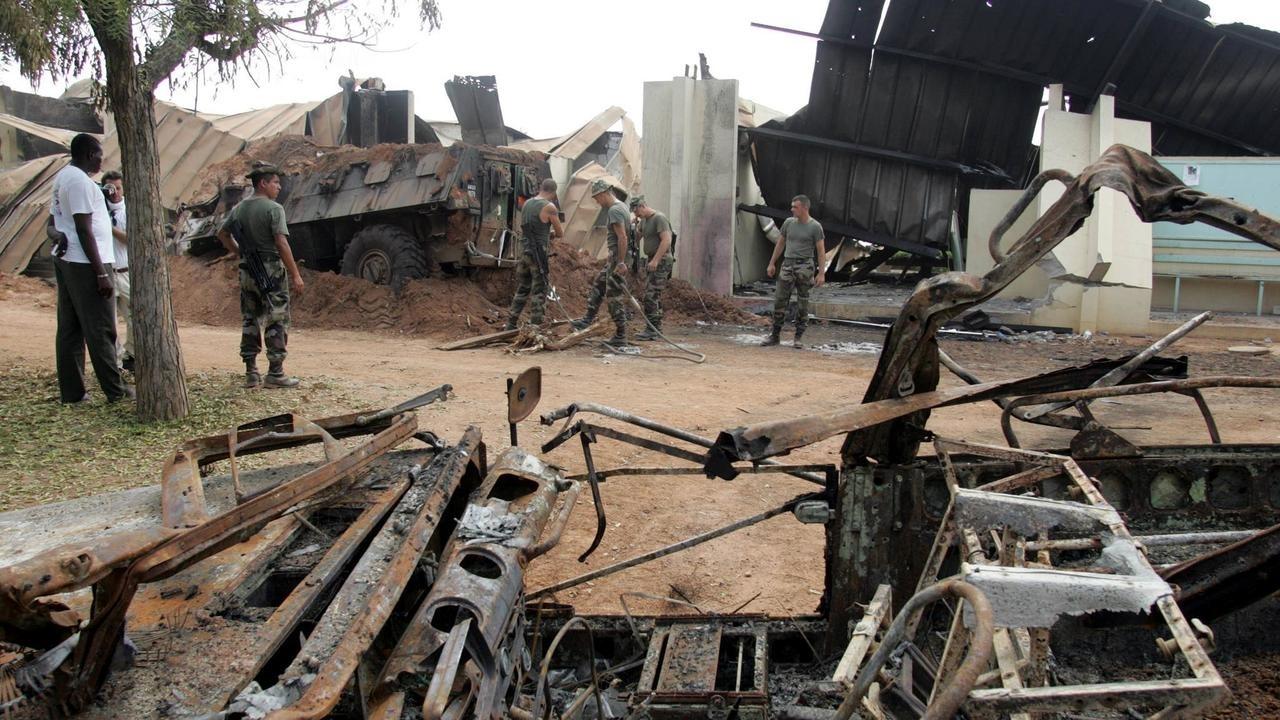
On November 6, 2004, two Ivorian planes bomb a French camp of the Licorne force in Bouaké, Ivory Coast: nine French soldiers and one American civilian are killed, 38 people wounded. In retaliation, the French army destroys Ivorian aviation. This is followed by strong tensions between Paris and Abidjan. More than…
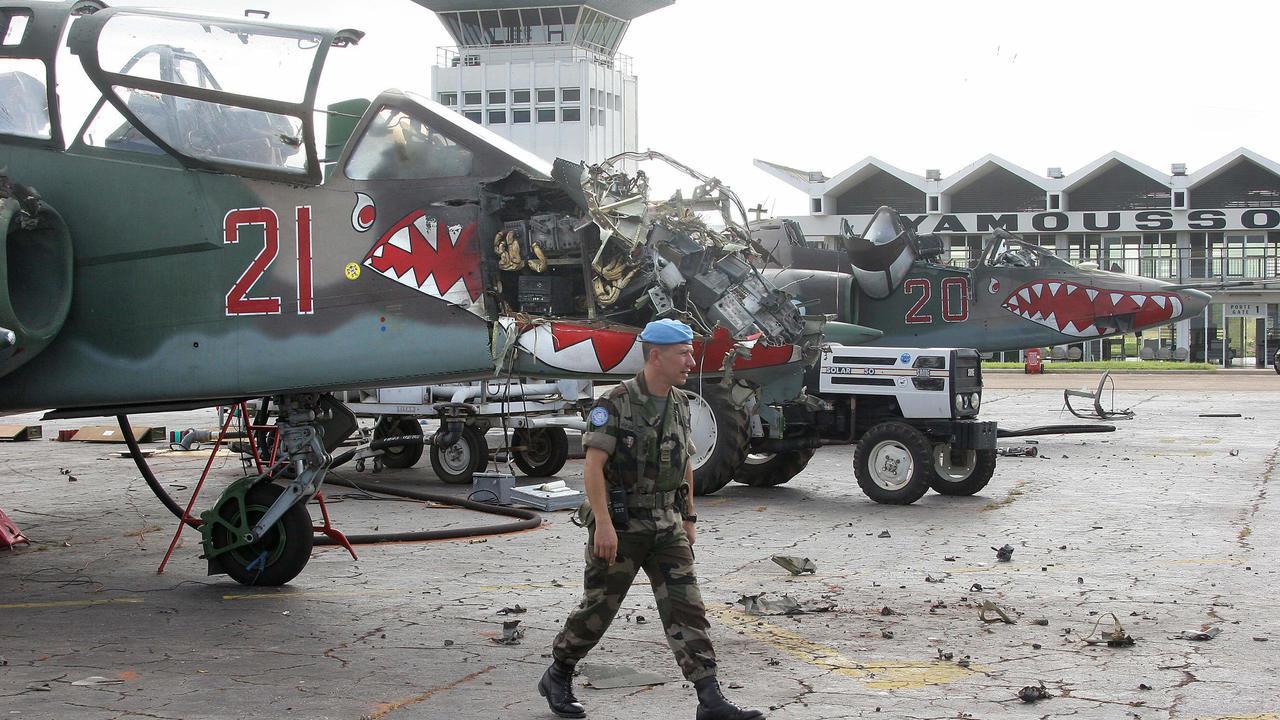
The dock will be empty. Of the three accused, former Belarusian mercenary Yury Sushkin suspected of piloting one of the Sukhoi planes has disappeared. The two presumed Ivorian co-pilots, Ange Magloire Gnanduillet Attualy and Patrice Ouei benefited from an amnesty law in their country in 2007. A situation "very, very hard" to live with explains Edwige Laliche, who lost her son. "Imagine, they kill your child… You know who the murderers are and they are free ! They destroyed me, they destroyed my life, they destroyed many things. There is a trial, more than sixteen years later, and they are not there ! This is perhaps what will be the hardest," she confides.
So it is not from the accused that the clarifications so eagerly awaited by the victims and their families will come. For many gray areas persist in this case. Starting with the central question: who ordered this bombing and why?
Brief reminder of the context. In November 2004, Ivory Coast is split in two: the loyalist forces of Laurent Gbagbo in the south, the rebels of Guillaume Soro in the north and between the two, the Blue Helmets and the French of the Licorne force. Despite ceasefire agreements signed in 2003 and against the wishes of President Chirac, Laurent Gbagbo launches on November 4 a reconquest operation notably on Bouaké, the rebel stronghold. After bombing rebel positions until the morning of the 6th, at midday, it is on the French camp that the Ivorian Sukhoi planes fire.
► Read also: Read the full investigation into the Bouaké bombing case
The hypothesis of a target error is quickly ruled out by witnesses and the circumstances of the attack. Who would have knowingly ordered the raid?
Ivorian planes, Ivorian decision? This is the hypothesis of Master Lionel Béthune de Moro, lawyer for several victims. "We have a simple reading," he explains. "That whoever pays for the planes, the pilots, the mechanics could be the one who gives the order. And we have the financial flows between Ivory Coast and Belarus." On the other hand, he specifies, "there is no certainty about the Ivorian decision-maker: is it the head of state, commander-in-chief – which does not seem as straightforward, in a country that was going through a crisis and division? Is it the chief of the armed forces general staff ? There has also been talk of certain hawks circling around Ivorian authorities…" he points out, before adding: "But obviously, what my clients are above all expecting is the truth. Whoever commissioned the bombing."
For those holding an Ivorian responsibility, the raid would then have been intended either to provoke a break with France, or even the departure of the tricolor forces; or to conceal the difficulties encountered in the reconquest operation.
But a murky episode is at the heart of another hypothesis: that of French responsibility. Ten days after the attack, Togo arrests eight Belarusian nationals, whom it suspects of being linked to or even the perpetrators of the bombing. Alerted, neither the Ministry of Interior under Dominique de Villepin, nor the Ministry of Defense under Michèle Alliot-Marie, nor the Ministry of Foreign Affairs under Michel Barnier take action. They are released. For Master Jean Balan, lawyer for the majority of the civil parties, this points to Paris's involvement. "Reality for me is extremely simple," he explains. "For me, France, well, a camarilla in power is at the origin of this bombing. The deaths were not intended. When deaths occurred, there was total panic and therefore lies, one after another."
For the lawyer who has been fighting in this case for 16 years, "they did it with the express intention of getting rid of Gbagbo, saying : "well, Gbagbo attacked us so, we're going to get rid of him". Who, precisely, would have given the order ? We do not know," the lawyer concedes. "All we know is that people like Villepin and Alliot-Marie did the absolute maximum to never be able to question or arrest those responsible for carrying it out, so that they could never be heard by French justice," he asserts.
In February 2016, investigating judge Sabine Khéris had found that "everything was orchestrated so that it would be impossible to arrest, question or judge the Belarusian perpetrators of the bombing". According to her, "the decision to do nothing concerning the pilots arrested in Togo was taken identically by the Ministry of Interior, the Ministry of Defense and the Ministry of Foreign Affairs". She had then requested referral to the Court of Justice of the Republic, the only body authorized to judge ministers. On May 17, 2019, the request commission of the CJR decided not to prosecute Michèle Alliot-Marie, Dominique de Villepin and Michel Barnier, finding that the "inaction" of the latter was not sufficient to justify proceedings and that suspicions of obstruction of investigations were not substantiated.
The three former ministers are nonetheless expected to be present as witnesses during the trial that is opening. Much-anticipated hearings, even for victims, who like Jean-Paul Roko, do not believe in French involvement. "To have arrested pilots, mercenaries, and to have released them, that is still incredible ! Why not give the green light to arrest them or have them transferred to France, why ?" wonders the former soldier. And adds: "State secrets, if there are any, they must be lifted, we want answers!"
Our editors' picks of what matters. Monday to Friday.
By subscribing, you accept our privacy policy.