Article
Preparing the article…
If a translation is needed, this may take a few seconds.
If a translation is needed, this may take a few seconds.
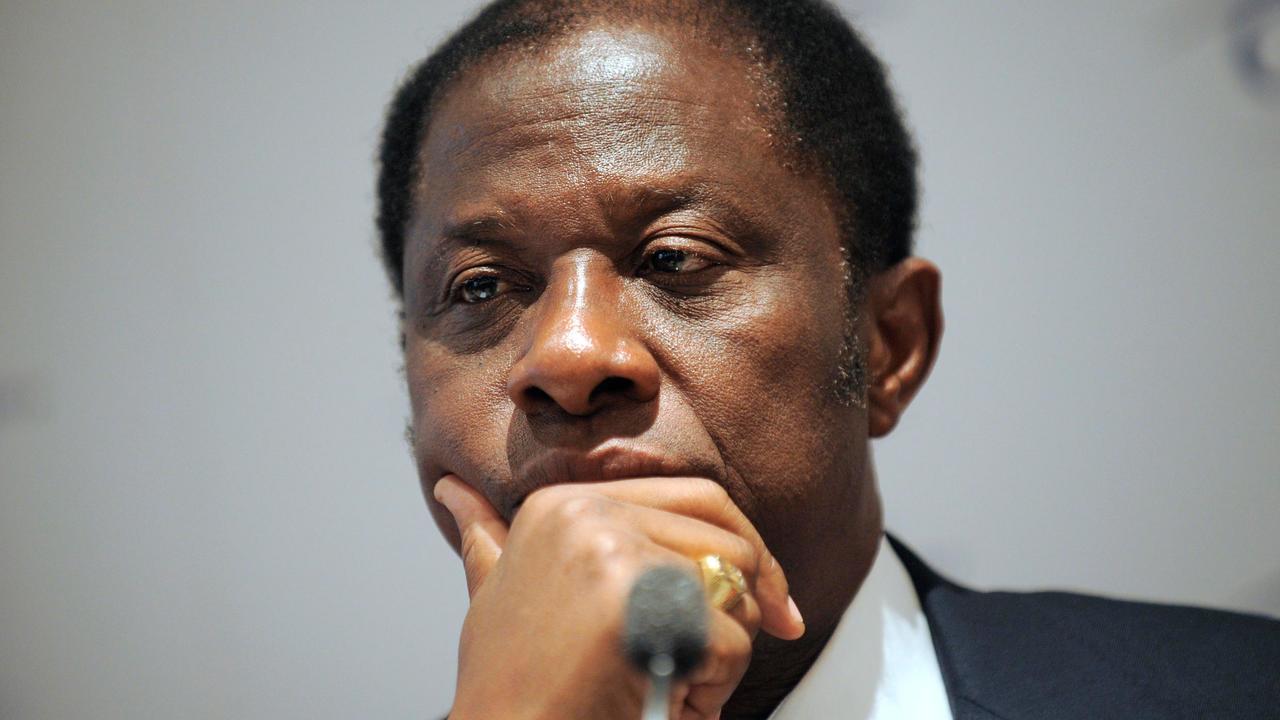
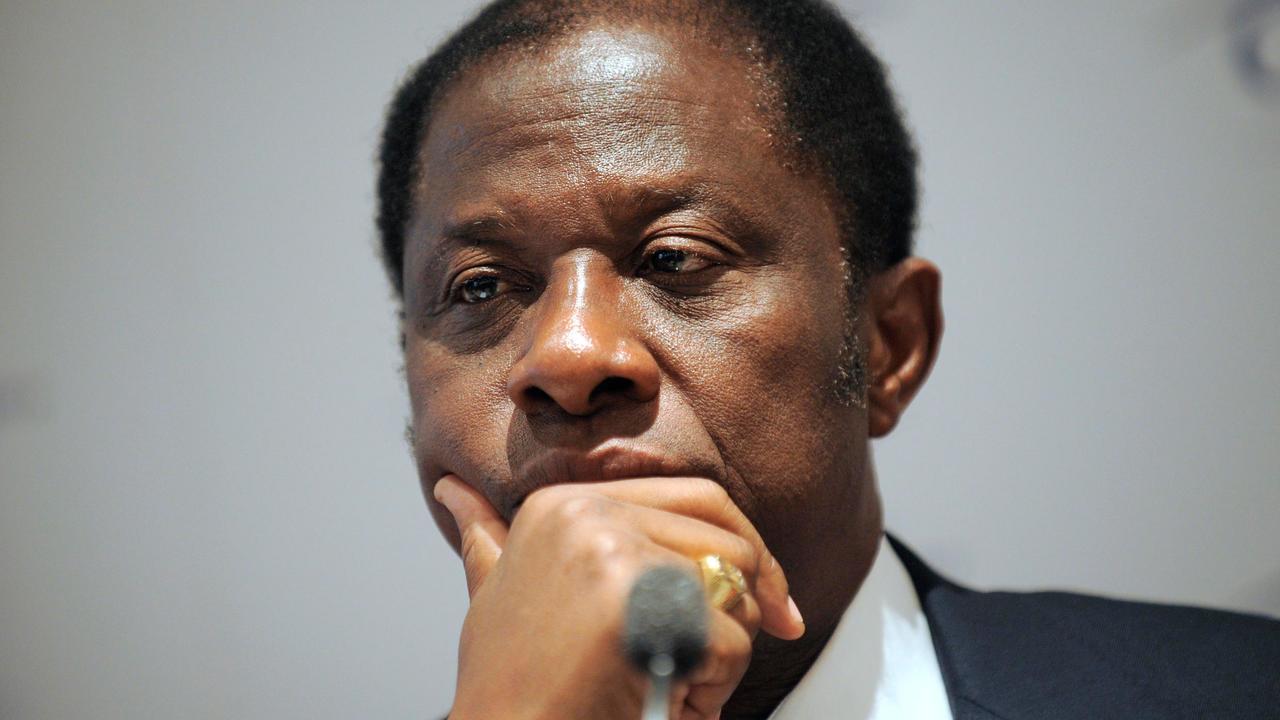
In the Democratic Republic of the Congo (DRC), the General Inspectorate of Finances (IGF) is on the verge of completing its investigation into the management of the two chambers of Parliament. At the Senate especially, since Félix Tshisekedi came to power, scandals have multiplied. In particular, outgoing president Alexis Thambwe Mwamba is being singled out…
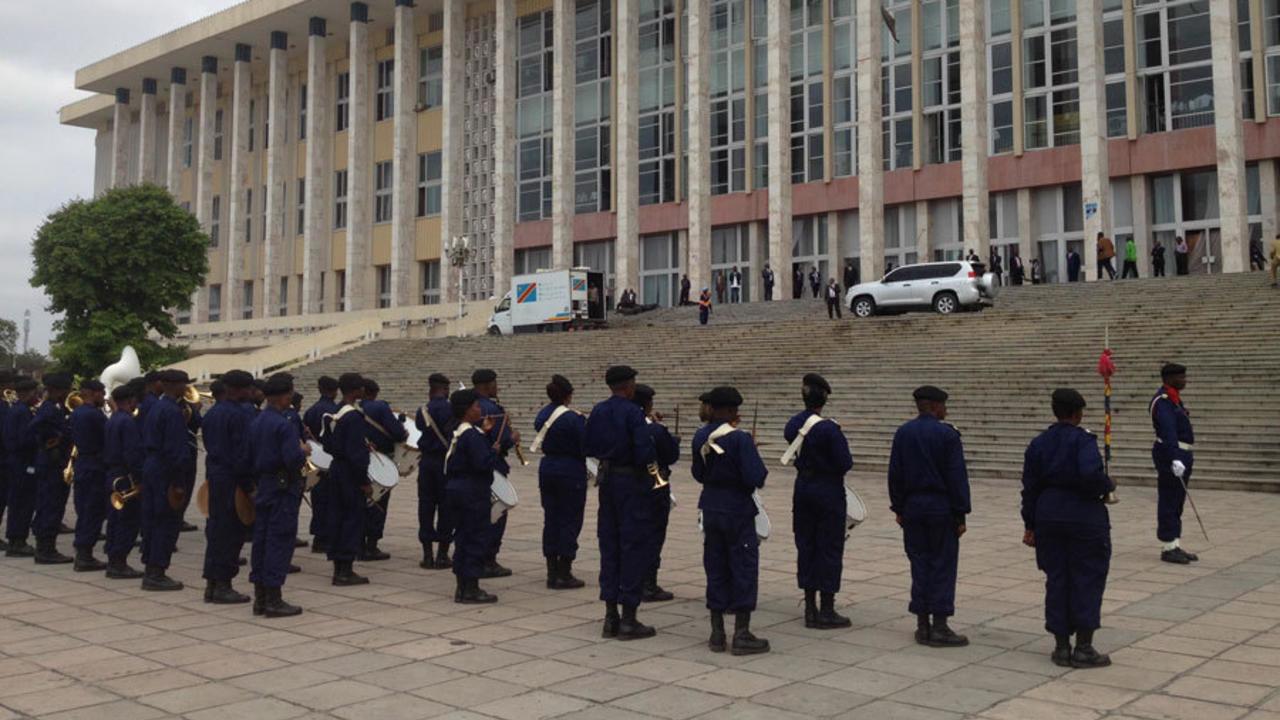
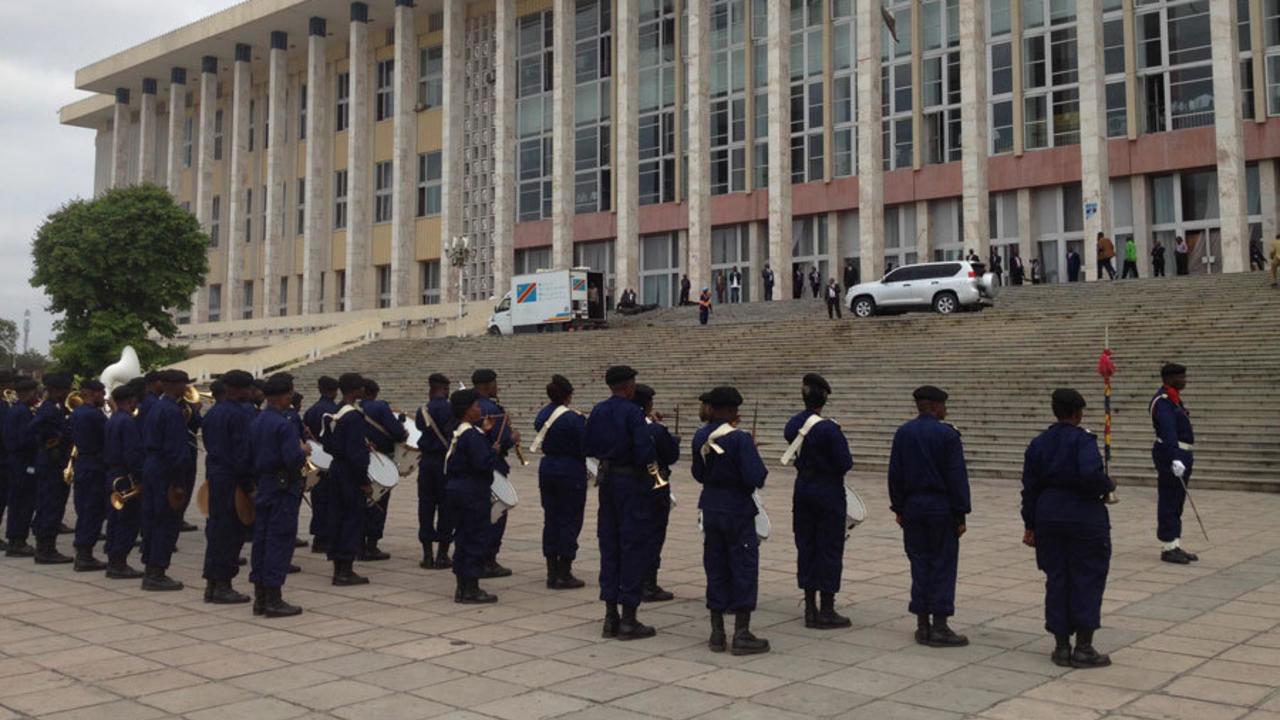
"Any bureau subjected to serious scrutiny could be thrown in prison. That's the reality of our institutions. Everything has a price here, and in cash. There isn't a single act or vote that isn't monetized by senators and deputies in one way or another," says, disillusioned, a veteran of the Congolese Parliament.
Although long part of the same political coalition, the elected official denies being a supporter of Alexis Thambwe Mwamba or Éric Rubuye, respectively president and questor of the outgoing Senate bureau of the Democratic Republic of the Congo (DRC).
Since January 2021, these two men, close to former head of state Joseph Kabila, have faced serious accusations of corruption and embezzlement of public funds from the judiciary and the General Inspectorate of Finances (IGF). Both have resigned, following petitions citing mismanagement. The latter, Éric Rubuye, is even in hiding. He left the country after escaping an arrest attempt.
"I'm not saying they don't deserve what's happening to them, I'm just insisting that the problem runs much deeper. If there had been no crisis between President Tshisekedi and his predecessor, the events of early January, despite their apparent gravity, would have remained a non-event," the veteran senator continues.
Yet, on January 5, the day of the arrest attempt, the questor had begun distributing 10,000 dollars in cash to senators, drawing from outstanding operating expenses paid a few days earlier by the public treasury. On January 6, more than three million dollars had been withdrawn from one of the Senate's accounts and brought to the home of its president, instead of being deposited in its safe, at the People's Palace, the seat of Parliament in Kinshasa. Since then, revelations have multiplied about the Senate's financial health, its debts to the banking system as well as certain private companies.
The facts are all the more troubling in that, at that time, the battle for control of the upper house had already begun in January 2021. A petition has just been filed against the Senate's First Vice-President, Samy Badibanga, a close associate of President Félix Tshisekedi.
For supporters of the head of state, these millions of dollars in cash were to be used to push senators to remove Mr. Badibanga. Yet, after having toppled the bureau of the National Assembly, they had hoped and are now on the verge of succeeding in taking definitive control of the Senate. This Tuesday, March 2, a bureau essentially designated by his new coalition, the Sacred Union, should be elected and installed.
10,000 dollars to corrupt senators?
"How can one speak of corruption? These 10,000 dollars, we distributed them to all senators, including Samy Badibanga. It was money that the state owed the Senate. Since 2019, we had not been receiving the full amount of our operating budget," explains a member of the outgoing bureau and close associate of Alexis Thambwe Mwamba.
Yet, on December 30, 2020, despite budgetary restrictions, the upper house of Parliament is given good news. Against all expectations, at the very end of the fiscal year, more than 7 million dollars are made available to it in one of its accounts at the Banque Commerciale du Congo (BCDC). Half is withdrawn the next day and is used, among other things, to pay senators.
"This whole affair is political. Éric Rubuye had already received threats by telephone from people calling with hidden numbers. They were promising him he would go to Makala [EDITOR'S NOTE: Kinshasa's central prison] if he didn't cooperate. He was one of Thambwe Mwamba's loyalists fighting to prevent him from falling. In targeting him, it was Thambwe Mwamba they were aiming at. At that time, people were offering you everything—money, positions—to join the Sacred Union. He refused," says still this member of the outgoing bureau.
This version is disputed by a close associate of Samy Badibanga, First Vice-President of the Senate.
"When Thambwe Mwamba's people were caught red-handed, they began distributing money to everyone to hide the real motive. Knowing its purpose, Samy Badibanga returned this money. Everyone knows it was supposed to corrupt those who could vote in favor of his removal, while the vice-president was working in the shadows to remove the six other members of the bureau," he retorts.
When asked the question directly of senators themselves, some mention a bribe to sign the petition against Samy Badibanga, others, an advance on an individual loan of 100,000 dollars to which each senator would be entitled due to an increase in the remuneration package in the 2021 finance law.
"We were going to buy out the credits of those who had them and grant them to those who didn't," explains still the member of the outgoing bureau, citing a concern for fairness. Until then, of 109 senators, only 65 benefited from a bank credit, of which 45 were at Afriland First Bank CD. "BCDC had accepted the project. We couldn't do it with Afriland, which had also granted many credits to deputies and was already having problems getting them repaid," he adds.
Here again, the explanation fails to satisfy the Sacred Union camp. "I don't quite understand how one can make an advance on a loan that hasn't been formally contracted, by taking the money from the Senate's outstanding operating expenses," points out one of its senators. The latter admits to having heard about this project as early as December and having been suspicious of it: "We were supposed to repay 3,700 dollars over 3 years, that's more than 130 million. At the bank, the rate was 14%, so the bureau was supposed to pocket the difference."
For the member of Alexis Thambwe Mwamba's bureau, the explanation is simple. The repayment was to be degressive over the years and would be deducted at source from senators' monthly salaries.
Aggravating fact for the Sacred Union: while on January 5, after this distribution to senators, Questor Éric Rubuye escapes an arrest attempt and takes the road to exile, on January 6, President Alexis Thambwe Mwamba orders the Senate treasurer to withdraw the remainder of the funds made available to him in cash, approximately 4 million dollars in various currencies, and return it to his home.
During a plenary session on February 2, 2021, M. Thambwe Mwamba confirms the facts but assures that the money was returned the very next day to the administration of the upper house of Parliament, which no one seems to dispute today.
For Alexis Thambwe Mwamba's close associate, he was merely acting that day "as a prudent householder."
"When money comes out of the bank too late, what else could he do? We couldn't wait to recover these funds, currencies are scarce and the bank could have given them to another customer. What would it have looked like if the money had been stolen? It has happened before in other institutions and with the economic situation we know, it was difficult to trust the administration and security personnel," he assures.
In any case, Jean-Philibert Mabaya, senator of the Sacred Union and questor of the Senate for 12 years, assures that this situation never happened to him.
"We have an armored van, a safe at the People's Palace. What's the point if not for that? Once money is made available, it belongs to the Senate. You can always ask the bank to keep it and return it first thing the next morning. That's what we've always done," he maintains.
In the battle for control of the Senate, money was undoubtedly a key factor and in more than one way. Its origins lie a year earlier. In November 2019, the Congolese government, on the brink of payment default, signs an agreement with the International Monetary Fund (IMF). In exchange for emergency aid to stabilize its balance of payments and through it, its currency, it had committed to no longer using the printing press and to paying only binding expenses. Inflation was rampant, the Congolese franc was sliding against the dollar. More and more voices were rising to denounce the excesses of bloated and budget-draining institutions.
This measure hit parliamentarians hard. "Because of institutions like the IMF, we had to limit their remuneration and it wasn't enough," says the member of Alexis Thambwe Mwamba's bureau.
In a country where nearly 80 percent of the population lives on less than two dollars a day, a parliamentarian's basic salary still remains just over 4,300 dollars a month today.
"But we had created an entire system of invisibles. Part of the remuneration is hidden in two categories: operating expenses and special intervention fund," recounts this close associate of the former Senate president.
This compensation called "differential and supplementary remuneration" allows a senator to almost double his salary. But that's not all. There are also political bonuses for members of the bureau, those of standing committees and provincial groups. With the country divided into 26 provinces and 109 senators, almost all benefit from them. The most modest is 1,100 dollars a month. "But most senators don't earn more than 10,000 dollars a month," assures a member of the interim bureau, in place until Tuesday's election.
This may not be entirely true. According to a member of Alexis Thambwe Mwamba's bureau, despite the difficult economic context, the budget items voted in the 2021 Finance Law allow senators an increase of at least 3,000 dollars this year, which would allow them to earn more than 13,000 dollars a month. This new envelope would be called the Senate Bureau Fund for Intervention with Senators (FBI). It would have been obtained by parliamentarians following the discovery of budget overruns at the prime ministry and presidency, notably due to improvements in salary scales.
"We threatened not to vote for the Finance Law if they didn't improve our remuneration," explains still this member of the outgoing bureau.
"I formally deny any increase in senators' remuneration in 2021. If the Senate uses its operating budget for remuneration, we will ensure that the amounts of this budget are revised so as not to protect disguised remuneration," assures Marcellin Bilomba, principal adviser to President Tshisekedi on Economy and Finances.
This new FBI bonus of 3,000 dollars was nonetheless paid last week, according to several sources. Furthermore, at each parliamentary session, the Senate bureau pays attendance fees to senators. The government, for its part, provides reading bonuses as extra-budgetary expenses. These envelopes are intended to motivate the examination of bills that are introduced. In case of extraordinary session, the senator's base salary is even doubled, and there are almost every year. Members of the chamber are also entitled to airline tickets at each parliamentary recess, even if an extraordinary session comes to cancel them. For example, the extraordinary session since the beginning of the year should cost more than 2.5 million dollars, mostly in the form of remuneration. Senators also receive a bonus if called to congress.
Yet, since Félix Tshisekedi came to power in January 2019, senators have been complaining. Political bonuses are no longer cumulative and are often no longer paid. Even if a senator sits both in a commission and a provincial group, only his highest bonus is paid. Attendance fees are no longer abundant, the Senate bureau was only installed in August and would only have known one session that year. In 2020, Covid-19 and political crisis disrupted the parliamentary year, rendering the People's Palace equally unproductive.
Senators also blame the exchange rate, which they say has cost them a quarter of their remuneration since 2016. Healthcare was no longer reimbursed regularly, especially if you were in the opposition.
"Even us, FCC senators, increasingly felt we were no longer being defended. What good are political theatrics and having the Finance Minister in our camp when you can't even get a payment?" explains one of them who, like many, has since joined the Sacred Union.
Meanwhile, Félix Tshisekedi's presidency is blowing through its credit lines. While the IMF calls for restrictions, the Senate bureau takes out two loans totaling 7 million dollars. According to one of its members, this was to compensate for irregular and incomplete payment of the allocation provided for in the budget. But another source explains that the first of 3 million was a revolving credit, a sort of working capital that made it possible to offset delays in payment of the special intervention fund portion of remuneration. The second, on the other hand, of 4 million, was to finance "the installation of bureau members, renovations and other expenses" and would not have been managed by the administration. 2.8 million would remain to be repaid.
As early as March 2020, between the bureau and the plenary, tensions run high, and the first spark is lit by an FCC senator, member of the AFDC-A of the future Senate president and former minister of Joseph Kabila, Modeste Bahati Lukwebo.
At the opening of the parliamentary session, Bijoux Goya discovers, like her colleagues, that their plenary hall has been renovated. The cost of the work was 4.5 million dollars, an amount higher than all the investment projects provided for in the Senate's 2020 budget.
"The work we see in this room isn't worth that amount. And besides, how were they necessary given our budgetary situation?" explains Bijoux Goya even today.
Moreover, this contract had been awarded to Modern Construction, a company run by a close associate of the Senate president, Indian businessman Harish Jagtani. The office of Alexis Thambwe Mwamba had even represented him in the acquisition of the parking lot land of the Grand Hotel of Kinshasa.
"The chairs were giving way," justifies in turn a close associate of the former Senate president, before explaining that for the choice of Harish Jagtani, "we had to find someone who would accept doing the work without having received a penny, and in the end, we only paid him one million."
This member of the outgoing Senate bureau explains the high price of the work by the cost of VAT and the need to have certain goods sent by plane, given the tight deadlines.
"Everyone was angry. And there was suspicion of many more irregularities still," recalls Bijoux Goya.
New senators would have been "forced" to open an account at Afriland First Bank CD, she points out further. Yet, Questor Éric Rubuye was one of the administrators of the bank. "We suspect a deal. Until then, we were all at BCDC because that's where remuneration was deposited and where we could get loans."
For Afriland First Bank CD's deputy general manager, Patrick Kafindo, it's a false argument: "In 2006, when institutions were set up, we had to finance parliamentarians. No bank here wanted to do it. We financed 400 deputies and 100 senators before their credits were bought back by BIAC," he explains before adding "When parliamentarians were at BCDC, was that a problem? We're in a competitive market. These things evolve. You shouldn't ask me the question that way."
According to one of Afriland First Bank CD's whistleblowers and former auditor, Navy Malela, M. Rubuye was one of the bank's privileged clients and enjoyed "many advantages" with his company Erru Groupe, notably cash availabilities of several tens, even hundreds of thousands of dollars, between 2018 and 2019. A close associate of M. Rubuye denies these accusations and assures that the latter resigned from his position as administrator of Afriland First Bank CD after his election and is no longer a shareholder or manager of Erru Groupe. It nonetheless remains attributed to him, according to the national business register.
The minister's letter is received by the Senate on December 24, 2018, and the same day, the first million is withdrawn in cash. Four more withdrawals will be made by the Senate treasurer, until January 14, 2019, ten days before Félix Tshisekedi's swearing-in, as revealed by bank documents provided to RFI by the two whistleblowers from Afriland First Bank CD.
In his letter to the bank's general manager, Henri Yav Mulang specifies that this substantial loan would be made "for the remuneration and special intervention fund of the Senate" and was to make it possible to pay the remuneration for January 2019 as well as exit bonuses, in favor of members of the Senate bureau and members of their cabinet staff.
Three days after the first withdrawal, the questor at the time, Jean-Philibert Mabaya, produces a document called "forecasts of year-end 2018 expenses." In this document, it is mentioned that nearly half the amount was to be used to pay December and January remuneration. The rest was allocated to the bonuses for members of the Senate bureau and 28 senators. Barely 350,000 dollars were allocated to cabinet staff members. According to Jean-Philibert Mabaya, the senators concerned were the alternates of those who, in 2011, had been elected to the National Assembly, the others having already received their exit bonuses.
There were no senatorial elections between 2006 and 2019. With the exception of alternates who arrived during the legislature, all senators leaving in January 2019 had sat for nearly 13 years. But that did not prevent them from receiving, on the occasion of the 2011 presidential and legislative elections, their exit bonuses.
In other words, they obtained these bonuses without actually leaving their seat. A credit line of more than 2.35 million dollars had already been opened in 2010 to finance them, this time by the International Bank for Congo in Africa (BIAC). It was to be guaranteed by the government but has never been repaid since. Senators had been paid mostly in kind and had received a car. In the DRC, they receive six months of basic salary both upon entry and upon exit from office, which still exceeds 25,000 dollars today.
According to the honorable Mabaya, most of the cabinet staff members of the Senate bureau had already received their exit bonuses in 2011. Only those of two new Senate bureau members, elected during the legislature, benefited from them in January 2019.
This version is disputed by some senators and several cabinet members who continue to demand their due. "Each bureau member had received the envelope allocated to his cabinet, but they returned nothing, except Moïse Nyarugabo [EDITOR'S NOTE: Elected as assistant rapporteur of the Senate in 2016]," one of them believes. "Mabaya was even heard about this last year when we complained, but there was no follow-up."
For this cabinet member, "neither the alternates nor the bureau members should have received these bonuses." Not the alternates because their principals had already received them, nor the bureau members because they had already received them. The stated amount of 1.3 million for exit bonuses alone is in itself surprising. It exceeds the legal amounts for the 35 senators who would have been affected.
For the honorable Mabaya, there is nothing abnormal about the fact that Senate bureau members received their bonus in 2019. "Members of the bureaus both at the National Assembly and at the Senate had never received their bonuses, the regularization was done at the end of the mandate," he explains. As for the exorbitant amount of the envelope, he points to the Senate's financial division chief and the Finance Ministry.
When asked about this, a member of the interim Senate bureau, installed after the 2018 elections, says he doesn't remember what had allowed January 2019 salaries to be paid. He had never even heard of this loan from Afriland First Bank, but he didn't seem to want to ask more questions. "Among colleagues, we get along, there was no reason to dig into the past," he explains.
In any event, the Senate retains a debt of more than 2 million dollars to BIAC, and this bank, in liquidation since, notably for having lent money without being repaid to institutions, has frozen as a precautionary measure an account of more than 1 million dollars. This money was to be used to finance senators' retirement.
Since the fall of M. Thambwe Mwamba's bureau on February 5, 2021, the tradition of "not digging into the past" is broken. The rapporteur of the interim bureau has multiplied statements evoking the overdrafts and debts of the institution. Besides the one from BIAC, the Senate faces debts in certain healthcare structures. The Kinshasa Medical Center is demanding 277,257 dollars. More serious, its accounts at BCDC show a debt of more than 5 million dollars.
In a letter of protest addressed to the president of this bureau on February 22, Alexis Thambwe Mwamba denounces "hasty conclusions and exaggerated statements likely to poison public opinion." He assures that upon taking office, the institution already had a 200,000-dollar liability in terms of healthcare. As for the 5 million deficit, he enjoins his successors to turn to the state, which would continue to owe tens of millions of dollars to the upper house of Parliament. "Assuming the Treasury pays, at your urging, just 10% of this amount, there would no longer be a debit balance anywhere," concludes Alexis Thambwe Mwamba.
The former powerhouse of the Senate might continue to have to speak out. The General Inspectorate of Finances (IGF) should submit its report to the head of state in the coming days. While Alexis Thambwe Mwamba was in office, its services had refused to collaborate with the elite body of public finances, which consequently had asked him, in writing, to justify some 50 million in operating budget since Félix Tshisekedi came to power. The former Senate president had replied by recalling that he had been in office only since August 2019. But for about ten days now, the IGF teams have been working frantically to examine the documents presented to them.
According to a source close to this case, certain operations were conducted by the outgoing Senate bureau without informing the administration's services. It cites, among other examples, the award of the contract for renovation of the Senate's plenary hall, as well as the distribution of 10,000 dollars to senators in January 2019.
"The inspectors received the list of beneficiaries but not the individual receipts that senators should have signed. We're still waiting for them," explains this source. According to the initial conclusions of the General Inspectorate of Finances, 82 percent of the resources made available to the Senate in terms of operating budget have not been justified. For a member of the outgoing bureau, "the IGF has become a political instrument. Do you think they're working in peace? The DRC is becoming a dictatorship."
Despite RFI's requests, Éric Rubuye, questor of Alexis Thambwe Mwamba's bureau, remained unavailable to respond to his request for an interview.
When contacted by RFI, the outgoing Senate president, Alexis Thambwe Mwamba, says he does not wish to "enter into the controversy" and refers to the explanations of his colleague already cited in the article and to his letter of February 22, 2021, addressed to his successor, the president of the interim bureau.
Our editors' picks of what matters. Monday to Friday.
By subscribing, you accept our privacy policy.