Article
Preparing the article…
If a translation is needed, this may take a few seconds.
If a translation is needed, this may take a few seconds.
The C64 Coalition calls for massive mobilization on July 8 to denounce the governance of Félix Tshisekedi amid increasing repression.
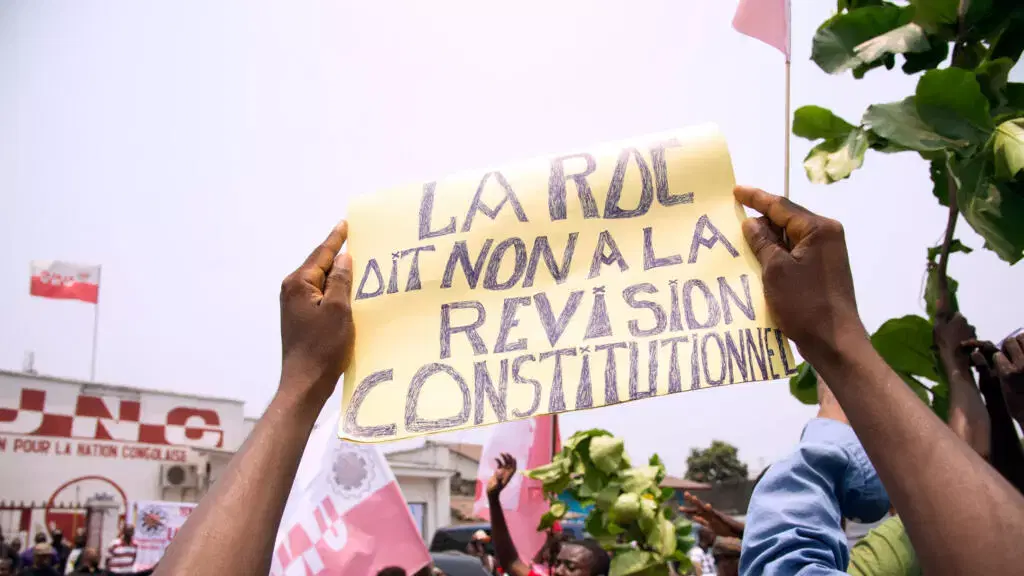
“We can no longer remain silent in the face of this authoritarian drift,” emphasizes an influential member of Lamuka, one of the major figures of the opposition in the Democratic Republic of Congo (DRC). This statement echoes the growing anger within the C64 Coalition, which brings together several opposition parties. Following a recent strategic meeting, this coalition announced a popular march scheduled for July 8 across the entire national territory. The objective is clear: to demand the resignation of President Félix Tshisekedi.
This initiative comes after the tumultuous events of June 30, when a demonstration organized by Lamuka was severely repressed by security forces in Kinshasa. These violent incidents resulted in several injuries and arrests, provoking outrage among opponents who accuse the Congolese government of systematically restricting fundamental freedoms. “Congolese citizens have been denied their fundamental right to peacefully demonstrate,” stated a spokesperson for the C64 Coalition in a scathing statement.
The decision to organize this new march takes place in an already tense political climate in the DRC. Since taking office in January 2019, Félix Tshisekedi has faced determined opposition that criticizes his management of the country and his ability to fulfill electoral promises. In March, our editorial team documented protests against the law governing the National Independent Electoral Commission (Céni), exacerbating tensions between the government and its detractors.
One of the main sticking points remains the transparency of the elections scheduled for December 2023. Opponents fear that preparations may be biased in favor of the current regime. The controversial law on the Céni is seen as a potential tool for manipulating the electoral process, which heightens suspicions and fuels public discontent.
The recent history of the DRC is marked by a series of contested and often violent elections. Since the country's independence in 1960, peaceful political transitions have been rare. The still-fresh memory of the chaotic elections of 2011 under Joseph Kabila continues to haunt minds; those elections were marred by massive fraud allegations and led to deadly post-electoral violence.
The Economic Argument No Longer Holds
In addition to political issues, the Congolese economy remains a hot topic at the heart of debates. The DRC possesses immense natural resources, including precious minerals such as cobalt and copper, yet struggles to transform this mineral wealth into prosperity for its population. Endemic unemployment and widespread poverty also fuel resentment towards the Tshisekedi administration.
According to a recent report published by the World Bank, despite modest economic growth in recent years, social inequalities persist and even widen in certain regions of the country. This situation further exacerbates social and political tensions.
In the face of ongoing economic challenges and increasing accusations of political repression, the opposition appears more determined than ever to maintain pressure on Tshisekedi. Leaders hope that their call to demonstrate will mobilize the Congolese people around a common goal: to demand justice and transparency in the management of public affairs.
The Security Stakes
Another crucial aspect lies in the omnipresent security stakes in the DRC. The country has faced various particularly violent internal armed conflicts for several decades, mainly concentrated in the eastern region where numerous rebel groups and local militias operate, sometimes supported by external powers seeking to control precious mineral resources. This chronic instability significantly hinders the sustainable economic development of the nation as a whole, according to experts consulted by RFI, Jeune Afrique, Anadolu Agency, and others.
However, there remains considerable interest in what is currently happening within the DRC itself, given its significant geopolitical importance due to the aforementioned abundant natural resources, as well as its strategic positioning in the heart of Central Africa, linking several other crucial continental nations for the future economic development of Africa in the near, medium, and long term, according to experts consulted by RFI, Jeune Afrique, Anadolu Agency, and others.
Our editors' picks of what matters. Monday to Friday.
By subscribing, you accept our privacy policy.