Article
Preparing the article…
If a translation is needed, this may take a few seconds.
If a translation is needed, this may take a few seconds.
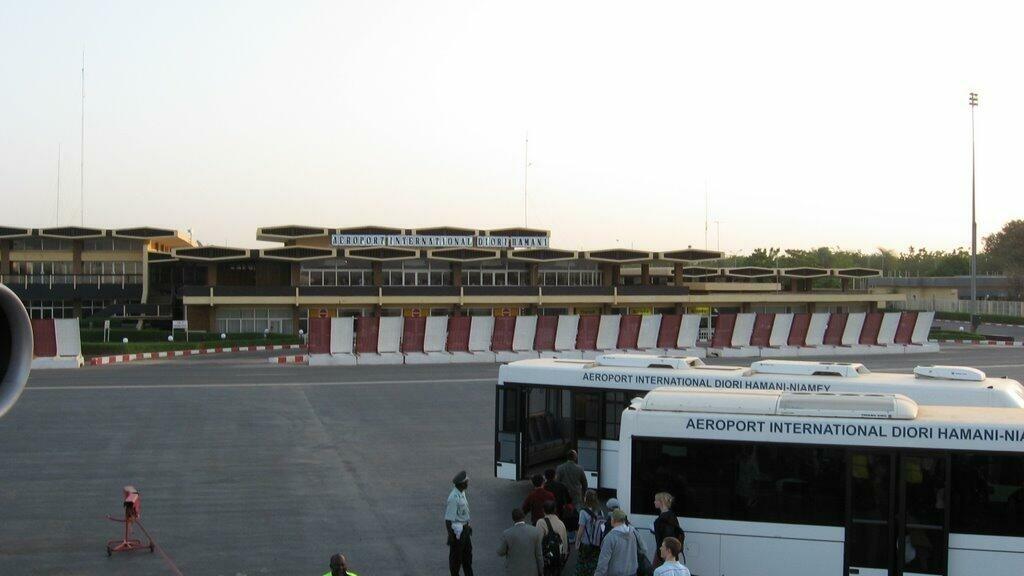
Gunfire was heard Thursday morning near Niamey International Airport, exacerbating security tensions in an already unstable region.

On Thursday morning, the usual calm of Niamey residents was abruptly interrupted by the sound of gunfire near Diori Hamani International Airport. According to several witnesses on site, contacted by phone, these shots caused panic among passersby and workers in the area. The circumstances surrounding this event remain unclear, but it occurs in a national context marked by escalating security tensions.
In immediate response to these incidents, Nigerien military forces have intensified their presence around the airport as well as in other strategic areas of the capital. "The situation is under control," said a military official who requested anonymity due to the sensitive nature of the information. He specified that investigations are underway to clarify the exact origin of the gunfire and identify potential perpetrators.
Recurring tensions and security responseThis is not the first time Niamey has been the scene of such events. In March 2021, we reported that gunfire was heard near the presidential palace, leading to a swift intervention by security forces. These incidents inevitably raise questions about the current stability of the country and its ability to prevent such events.
Niger has faced a growing threat from various armed groups operating in the vast Sahel region for several years. This area has become a hotspot of insecurity fueled by the proliferation of terrorist organizations such as Al-Qaeda in the Islamic Maghreb (AQIM) and Boko Haram. Their frequent attacks against Nigerien armed forces as well as against civilians exacerbate the climate of instability.
According to our previous reports, in June 2019, a series of attacks were thwarted both in Niamey and Diffa, demonstrating the persistence and adaptability of terrorist threats in the country. The Nigerien government had then stated that it had strengthened its security measures to protect its citizens against imminent dangers.
Regional context and international implicationsThe fragile security situation in Niger is part of a broader regional framework where several Sahelian states are grappling with similar challenges. Neighboring Mali has also been struggling with an Islamist insurgency since 2012, while Burkina Faso has faced a resurgence of jihadist attacks on its territory since 2015.
The potential impact on Niger extends beyond its national borders; it could affect its diplomatic and economic standing within the international community. As the country prepares to host an important regional summit aimed at discussing joint strategies to combat terrorism in the Sahel, these recent events risk tarnishing its security reputation.
The African Union (AU) as well as various international agencies are closely monitoring this concerning development in Niger. Experts believe that increased support for national efforts may be necessary to strengthen local capacities in the face of growing transnational threats.
Economic prospects under pressureEconomically, this persistent instability also poses a major challenge for the sustainable development of Niger, which heavily relies on the mining sector as a main pillar of its national economy—particularly through significant uranium exports to various international markets.
. The external perception regarding the overall uncertain environment could deter potential foreign investors or slow their current commitments until tangible improvements are observed in terms of security.
.......... < br > . < / em > . < / em > . < / p > < p > However, despite all these difficulties, it is worth noting some recent positive advances made through close collaboration between local authorities and international partners, particularly through joint initiatives such as the G5 Sahel Joint Force, whose main objective is to effectively combat cross-border threats and gradually stabilize the entire area.
Alongside government efforts, local communities also play a crucial role in maintaining social cohesion and strengthening resilience in the face of the constant adversity encountered daily. Community initiatives aimed at promoting interreligious and intercultural dialogue and raising awareness among the population on issues of peace and peaceful coexistence contribute to creating a harmonious living space despite the current difficult context.
Ultimately, even though the challenges are numerous and complex, it remains imperative to continue working hand in hand with all stakeholders involved to ensure a better future for African generations, especially those living in the heart of affected regions like the Sahel, where solidarity and collective commitment from the international community are more essential than ever to actively support the processes of peace and sustainable development for the long-term benefit of the populations concerned.
Our editors' picks of what matters. Monday to Friday.
By subscribing, you accept our privacy policy.