Article
Preparing the article…
If a translation is needed, this may take a few seconds.
If a translation is needed, this may take a few seconds.
The removal of military exemptions for yeshiva students triggers a series of protests in Jerusalem, revealing fractures within Israeli society.
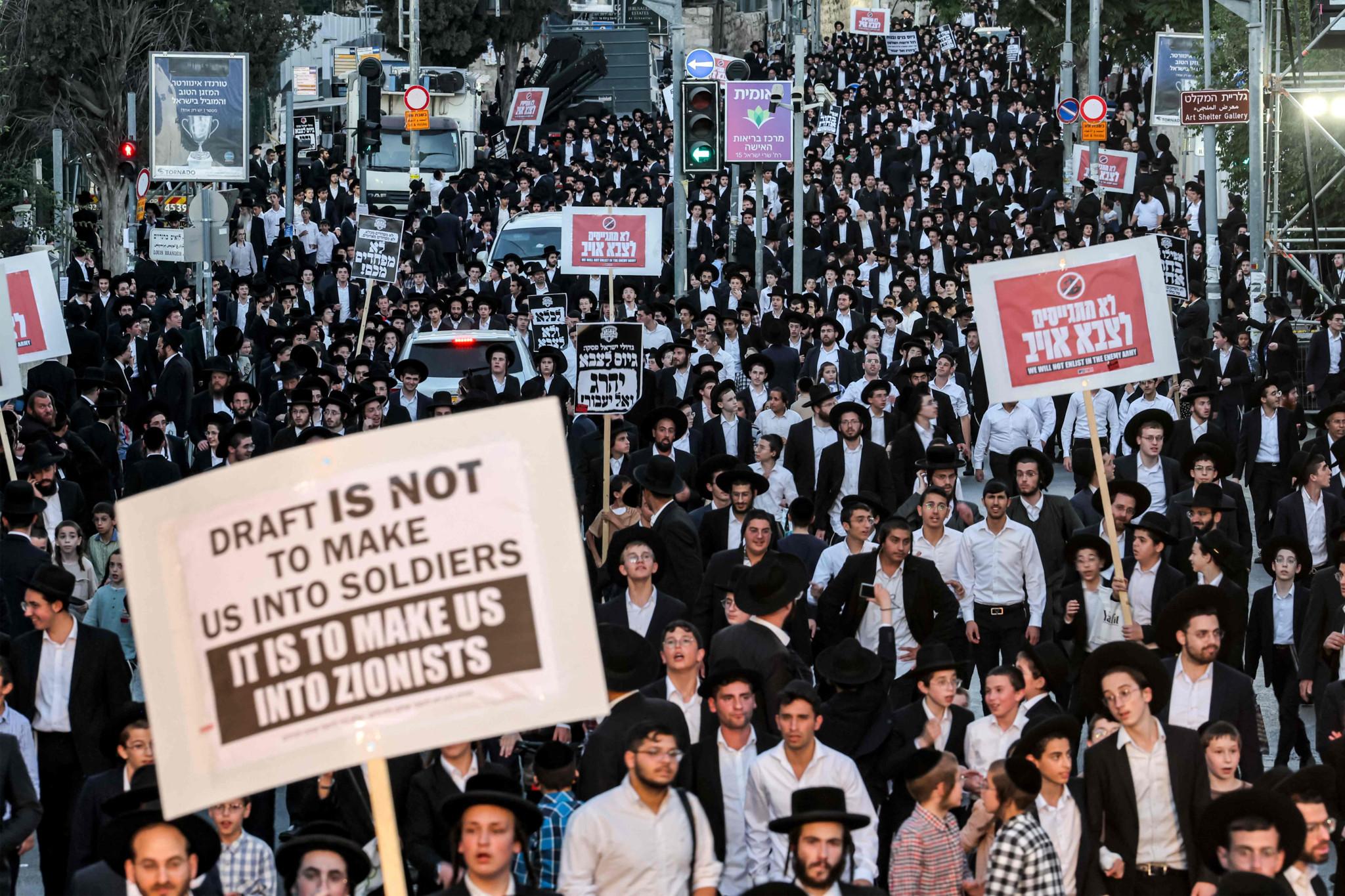
In the traditionally ultra-Orthodox neighborhood of Mea Shearim in Jerusalem, a dense and determined crowd has gathered. The faces are serious, signs are held high, and the slogans chanted with fervor reflect palpable anger. This gathering is not an isolated event but an expression of growing discontent within a community that feels threatened in its traditional way of life.
The source of this anger lies in a recent government decision to end the military exemptions that have been granted for decades to ultra-Orthodox young men. These individuals are generally exempt from mandatory military service in Israel to devote themselves entirely to religious study in yeshivas, educational institutions focused on the intensive study of the Talmud and other religious texts.
A Historical Dilemma
The issue of military exemptions for ultra-Orthodox individuals is far from new in Israel. Since the founding of the state in 1948, a tacit arrangement allowed yeshiva students to indefinitely defer their military service. This agreement reflected a compromise between the pressing need for national defense and respect for ancestral religious traditions.
However, over the decades, this compromise has sparked intense debate within Israeli society. On one side, many see these exemptions as unfair to those who serve in the army and put their lives at risk to protect the country. On the other side, the ultra-Orthodox community considers this exemption essential to its spiritual and cultural survival.
Historically, several attempts have been made to reform this exemption system. In 2012, for example, the Israeli Supreme Court annulled a law allowing these massive exemptions on the grounds that it was unconstitutional as it created inequality among citizens. However, every legislative attempt faces strong political and social opposition from influential religious parties in the Knesset, the Israeli national parliament.
The Economic Argument No Longer Holds
The tensions surrounding military service are not only cultural or religious; they also have a significant economic dimension. The limited participation of ultra-Orthodox men in the labor market is often attributed to their prolonged commitment to religious studies. This has led some economic analysts to estimate that increased integration of this population into military service could have positive repercussions for the Israeli economy.
However, this economic perspective is rejected by religious leaders who insist that the spiritual and moral value brought by their studies far outweighs any potential economic contribution they could otherwise offer.
Behind the Scenes of a Break
According to several local sources cited by RFI and Reuters, the current bill aims not only to drastically reduce these exemptions but also to financially incentivize those who voluntarily choose to join the army. This coercive approach is perceived by many as a direct attack on their community identity.
Fiery statements during the protests highlight this deep sense of injustice felt among the demonstrators: "We do not want to serve in an army that persecutes our people!" shouted a participant under anonymity during the tumultuous gathering.
A Fragmented Society
The rapid demographic evolution in Israel further exacerbates these existing internal tensions between secular and religious groups, as well as between Ashkenazi Jews (of European origin) and Sephardic Jews (of Middle Eastern origin). Ultra-Orthodox individuals currently represent about 12% of the population but are projected to reach nearly a quarter if no policies are implemented to alter this current trend.
Wider Regional ImplicationsAs these internal debates continue to stir Israel, even its Arab-speaking neighbors are closely watching how inter-community relations evolve there, as they directly influence bilateral and even multilateral diplomatic relations, especially regarding the Israeli-Palestinian peace process, which remains a source of intense regional and sometimes tragically violent global tensions, including sporadic armed conflicts in the broader MENA region, particularly in the Middle East and North Africa, including the Maghreb, the Levant, the Persian Gulf, and the Arabian Peninsula...
Our editors' picks of what matters. Monday to Friday.
By subscribing, you accept our privacy policy.