Article
Preparing the article…
If a translation is needed, this may take a few seconds.
If a translation is needed, this may take a few seconds.
The Democratic Republic of Congo emphasizes the importance of a unified response to the Ebola epidemic, including areas under the control of the AFC/M23.
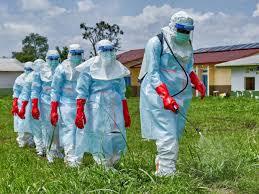
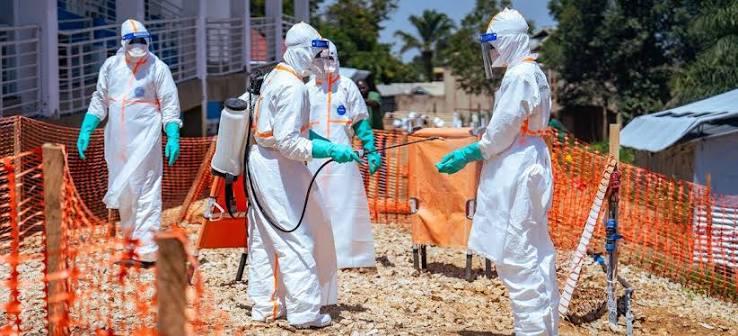
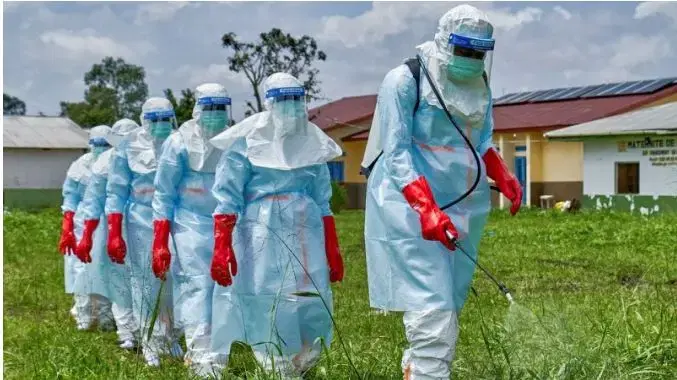
The response to the Ebola epidemic in the Democratic Republic of Congo (DRC) must be comprehensive, according to the authorities in Kinshasa. The Congolese government has stressed the need to include territories controlled by the Alliance of Democratic Forces for the Liberation of Congo (AFC/M23) in this strategy, arguing that the rebellion lacks both the expertise and resources necessary to manage this health crisis.
“The fight against Ebola is a matter of survival that transcends political and military considerations,” said Dr. Philippe Kapata, Congolese minister to the president, during a recent statement. He added that “any attempt to politicize or instrumentalize the Ebola crisis would endanger the lives of thousands, if not millions, of Congolese.” This position underscores the urgency of inter-state cooperation in a context where insecurity complicates the health response.
The DRC is facing a persistent Ebola epidemic, with cases reported mainly in the provinces of North Kivu and Ituri. The unstable security conditions in these regions have already hindered public health efforts, as reported by several local sources. Indeed, repeated attacks on health infrastructure exacerbate the situation and make access to care difficult for affected populations.
Previous articles from LE JOURNAL.AFRICA indicated that the Congolese government had placed the management of the epidemic response under the direct supervision of President Félix Tshisekedi. The latter had called for a general mobilization in the face of this health emergency, as the number of cases continues to rise each day.
The challenges are numerous: according to a UN report, lack of funding and insecurity severely hinder efforts to contain the virus. The international community is also being called upon to provide material and financial support to prevent uncontrolled spread of the disease.
At the same time, groups like Pamoja kwa Amani criticize what they see as negligent management of humanitarian crises by the Congolese government. They accuse Kinshasa of outsourcing problems to mask its own governance failures.
As negotiations between Kinshasa and the AFC/M23 continue in Doha, it is crucial for all stakeholders to set aside their differences and focus on public health. The Ebola epidemic represents not only a health challenge but also a test for national cohesion and the country's ability to address the multiple crises it faces.
Our editors' picks of what matters. Monday to Friday.
By subscribing, you accept our privacy policy.