Article
Preparing the article…
If a translation is needed, this may take a few seconds.
If a translation is needed, this may take a few seconds.
The COP15 on desertification in Abidjan calls for a radical transformation of agricultural practices to counter land degradation and ensure food security in Africa.

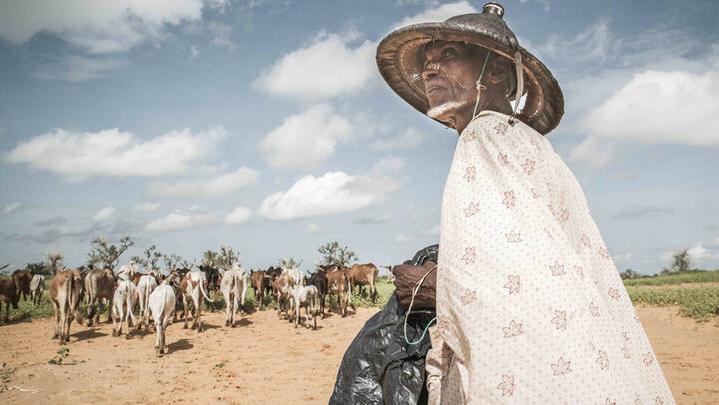
As the sun rises over Abidjan during COP15, the pressing challenges posed by desertification and land degradation take center stage. This conference, taking place in Côte d'Ivoire, serves as a poignant reminder of the climate emergency threatening arable land across the African continent. With a rapidly growing global population and increasingly unpredictable climate, experts emphasize that adapting agricultural methods is not just desirable but essential.
According to the African Union (AU), approximately 65% of agricultural land in sub-Saharan Africa is already degraded. This alarming figure jeopardizes not only future harvests but also the economic and social stability of many rural communities. In Abidjan, Dr. Silas Siakor stated, "To feed a growing global population, it is imperative to transform our agricultural methods." This statement resonates as a call to action in a context where every hectare counts.
A Call for Regional UnityThe Ivorian president spoke vigorously, emphasizing that only strengthened regional cooperation can effectively restore degraded lands. He insisted, "Every country must play its role in this collective struggle." This message aligns with the ambitious Great Green Wall project, an initiative aimed at restoring a band of green land spanning eleven African countries from Senegal to Djibouti. This project symbolizes hope for a sustainable solution to rampant desertification.
Discussions at this COP15 are not limited to large initiatives. Innovative local solutions are also emerging. Farmers are increasingly adopting agroecological practices that promote biodiversity and improve soil health. According to a recent study, these methods could increase agricultural yields by up to 30%, while drastically reducing the use of harmful chemicals for the environment.
Exacerbated Climate ChallengesIn previous columns, we documented how climate change exacerbates existing challenges in the African agricultural sector. Extreme weather conditions such as prolonged droughts and frequent floods make agricultural cycles unpredictable and directly threaten food security on the continent.
History reminds us that this is not the first time the African continent has faced major environmental challenges. In the 1970s and 1980s, the Sahel experienced a series of catastrophic droughts that decimated crops and caused massive famines. These events led to a global awareness of the need for sustainable management of natural resources.
However, despite these historical precedents, few significant improvements have been made to prevent such large-scale crises. Therefore, COP15 represents a crucial opportunity to leverage lessons from the past and avoid repeating these mistakes.
Towards Concrete ActionAs negotiations progress within this COP15, there is a shared hope among local actors that these dialogues will lead to concrete and measurable actions. The challenge remains immense; however, solutions exist, and it is essential to convince all stakeholders to act together for a more sustainable future.
The stakes extend far beyond the environmental framework to also touch on the economic and social dimensions of African development. Desertification does not only affect soils; it also disrupts traditional livelihoods and pushes thousands of people towards rural or even international exodus.
The Economic Argument No Longer HoldsThe argument that transforming our agricultural systems would be too costly no longer holds in the face of the exponential costs associated with the impacts of climate change if no action is taken quickly.
The World Bank emphasizes that investing now in adaptation could generate up to four dollars for every dollar spent, particularly through long-term savings (such as reduced public health costs related to pesticide pollution).
Economic and Political StakesThe economic implications are considerable: improving agricultural productivity could not only ensure food security but also stimulate the local economy by creating more green jobs throughout the food production chain.
Politically, this would strengthen regional stability as the scarcity of natural resources is often a source of tensions and conflicts, both internal and external, exacerbated by the growing context of climate change.
Thus, it becomes clear that beyond the obvious ecological considerations, the true economic and social future of millions of Africans who depend on agriculture for their daily survival is at stake.
Our editors' picks of what matters. Monday to Friday.
By subscribing, you accept our privacy policy.