Article
Preparing the article…
If a translation is needed, this may take a few seconds.
If a translation is needed, this may take a few seconds.
Not impossible. But at a snail's pace. The report on student pregnancy data 2020-2022 shows there has been a slight decrease in the number of cases. The number fell from 1,233 (school year 2019-2020) to 1,195 cases for the 2020-2021 school year, despite the efforts of...

Cases of pregnancies in schools are decreasing slightly, indicates Bernard Nahimana, planning adviser at the Ministry of National Education and Scientific Research (MENRS), during a six-monthly review workshop of UNFPA-Burundi's annual work plan, held Thursday, August 25 in Bujumbura. UNFPA, which advocates for zero unintended pregnancies and assists MENRS in combating student pregnancies, is dissatisfied with the trends. "Every time there is a case of pregnancy in a school, it is one case too many," says Richmond Tiemoko, Resident Representative of UNFPA-Burundi, clarifying that the objective is to reach zero.
In the fight against these pregnancies, parents play a paramount and essential role, insists B. Nahimana. Parents are their children's first friends; they must discuss Reproductive and Sexual Health (RSH), he explains. At least, this adviser commends the work of school aunts and godfathers. Where the latter properly perform their duties, cases of pregnancies have decreased, he assures.
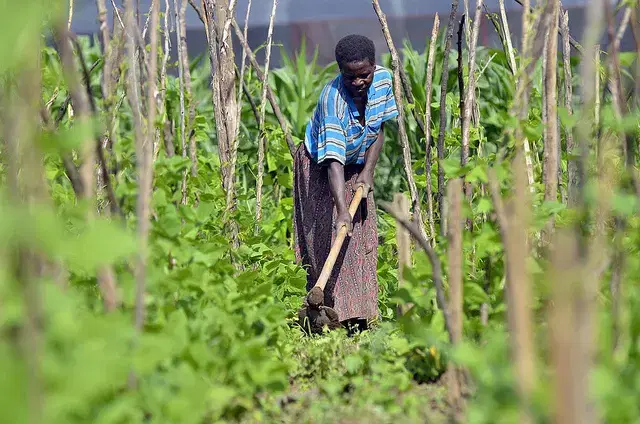
Yet poverty is cited as the primary factor influencing school pregnancies according to this Education ministry official. Indeed, the vast majority of girls who become pregnant while still at primary school have farmer parents (838 out of 1,060 according to the report on student pregnancy data 2020-2022 from MENRS). Ignorance and delinquency are also mentioned as factors of vulnerability, as well as irresponsible use of ICT (exploitation of sexual content).
Although the overall trend is downward, the figures in the report show that at the primary level, the number of student pregnancy cases has increased. It rose from 375 (in 2020) to 438 cases (2021). The highest number of cases is recorded in Bururi province (48 cases) while the previous year, it was Bujumbura Municipality that had the most cases; 73. This regional variation is a positive effect of the awareness-raising that MENRS conducted, says B. Nahimana.
At the post-primary level, trends have dropped. Cases fell from 858 (2020) to 740 for the 2020-2021 school year. Muyinga province experiences a high number of cases, 75 cases; whereas for the 2019-2020 school year, Muyinga province was at the top with 114 cases of school pregnancies.
The report further shows that the largest number of cases occurs in public schools rather than private and subsidized schools. Public schools are moreover more numerous than all other categories.
Girls pursuing the Language section are numerous and are most affected by pregnancies. Also, students aged between 16 and 19 years are the most targeted. (Chart: Number of pregnancies of primary students by age group and by year, from school year 2016-2017 to school year 2020-2021.
According to this report, student pregnancies proliferate in both rural and urban areas. During the 2020-2021 school year, 1,020 students from rural areas experienced pregnancies compared to 97 who were studying in cities.
Moreover, in the majority of cases, the perpetrators of these pregnancies are not identified. But for the most part, they are fellow students (102 out of 372 cases) according to this Education ministry report. Still, even when the perpetrator is identified, few are brought to justice. Of the 372 cases, 287 perpetrators faced no action against them.
"A student's place is not in a maternity ward. It is at school," reiterates Richmond Tiemoko, resident representative of UNFPA-Burundi. The latter indicates that this UN agency supports the Ministry of Education in documenting all cases of student pregnancies and in promoting responsible sexual education. Here, he cites projects such as the campaign "zero pregnancies in schools", the establishment of "school aunts and godfathers", etc. that UNFPA supports with the aim of good sexual and reproductive health (RSH) for these young people and adolescents.
So that these children have access to all useful information regarding RSH, UNFPA-Burundi's resident representative invites them to visit "youth-friendly health centers". Since the latter are friendly to young people, he says, they (the young people) can obtain information there that will allow them to avoid unintended pregnancies.
Note that after a school year, following current school regulations, a schoolgirl mother can return to school. But only 150 schoolgirl mothers returned to school during the 2020-2021 school year. The biggest surprise is that once expelled, schoolboy fathers do not return to school. Of the 73 boys expelled as a result of this offense during the 2019-2020 school year, only 3 returned to school the following year. Why?
Our editors' picks of what matters. Monday to Friday.
By subscribing, you accept our privacy policy.