Article
Preparing the article…
If a translation is needed, this may take a few seconds.
If a translation is needed, this may take a few seconds.
In Bujumbura, unemployed young people search incinerators and garbage bins in the economic capital every day in an attempt to find a way to make a living.
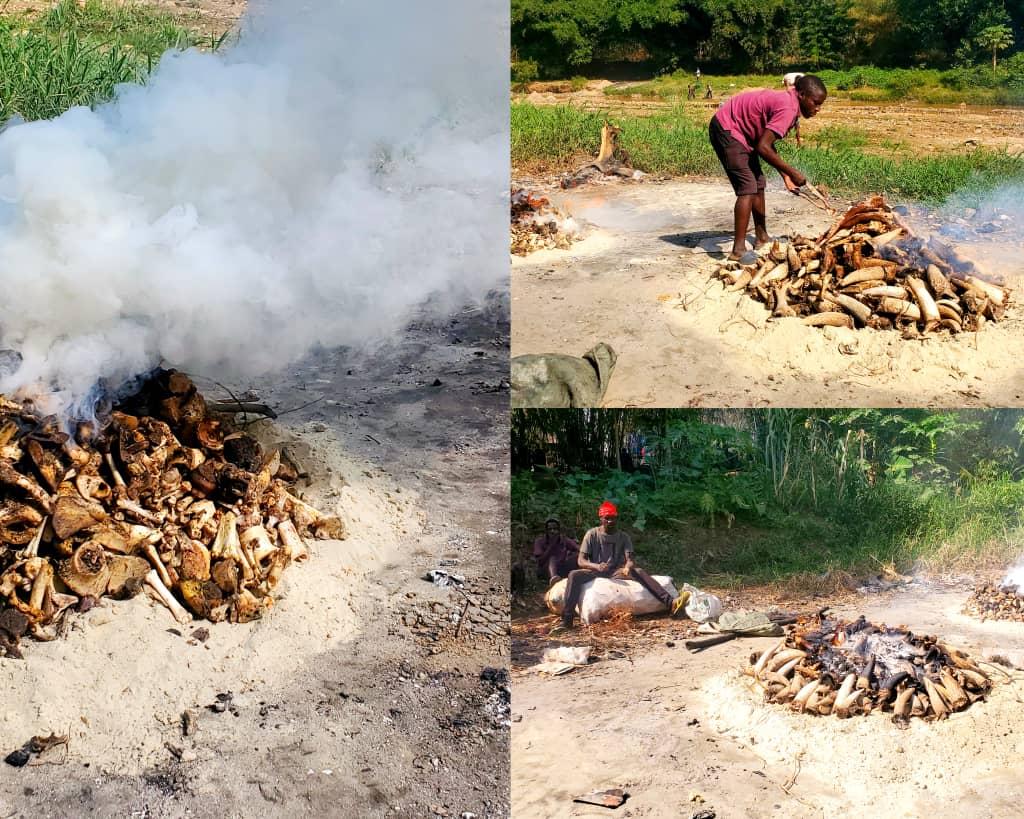
Gérard Irambona is one of these young people who, with his friends, collects bones notably from incineration sites, from garbage cans in Bujumbura and along waterways including the Ntahangwa river. They then resell them to be recycled into feed for laying hens.
"We collect beef bones from slaughterhouses and from large restaurants. Then we take them to a safe place, where we burn them with bags and wood," Gérard explains. "Once the fire is out, we transport them to a sales point, which allows us to make money," he adds.
These young people spend days searching for livestock bones, which they burn before selling them by weight at a very low price, given the difficulty of their work.
In adversity, they have no other choice. In the city, you have to work hard to make a living and plan for the future. Gérard, who has already bought a plot of land in his province of origin (Gitega) through this activity, states: "The income varies depending on purchases. You can acquire these bones at 300 BIF per kg and sell them between 600 and 700 BIF, representing a profit ranging from 300 to 400 BIF per kg."
"If we manage to sell a ton, that represents a significant sum. However, collection is difficult, and we can only deliver once a week, with a maximum of 500 kg," he notes. Despite the potential benefits, Gérard finds it difficult to give up this job, even though he hasn't earned much yet. "Thanks to this work, I was already able to buy a plot of land," he adds.
Clovis Ndikumana, a young man from Gitega, owner of a bone grinding mill in the industrial district, indicates that his business is developing through the purchase and grinding of roasted bones, which he mixes with other ingredients to produce feed for hens.
"I chose this work for profit, and I have already made gains. I was able to buy a plot of land and a car," he testifies.
"We receive roasted bones, without impurities. They are burned in a safe place until the fire goes out. That is why they are black and dry," Clovis notes, specifying that they need at least 500 kg of bones per week to mix with other ingredients.
Cédric, a zootechnician at the Cooperative of Awakened Women for Self-Development (CFRA), emphasizes the importance of encouraging activities that protect livestock. He recommends improving this method, which could benefit the development of families and the country. "Laying hens consume mainly cereals, but it is also possible to enrich them with other products depending on needs," he explains.
"You can add additives such as sunflower, methionine and others to promote chicken growth. Lysine and other products can also be incorporated," adds Mr. Niyongabo. According to him, it is essential that those who prepare feed for hens and their partners seek new knowledge to make the sector more productive. The introduction of modern machinery, such as mixers, could also improve the situation.
Burundi faces a challenge regarding youth employability. Approximately four hundred thousand young graduates are unemployed, according to 2020 census statistics. Faced with this situation, the country is encouraging young people to venture into entrepreneurship in different sectors.
Freddy Bin Sengi
Our editors' picks of what matters. Monday to Friday.
By subscribing, you accept our privacy policy.