Article
Preparing the article…
If a translation is needed, this may take a few seconds.
If a translation is needed, this may take a few seconds.
At a conference presenting the achievements of the Ministry of National Solidarity, Social Affairs, Human Rights and Gender for the first semester (July 2021-December 2021), Minister Imelde Sabushimike revealed that 29 families gave birth to triplets between July and December 2021…
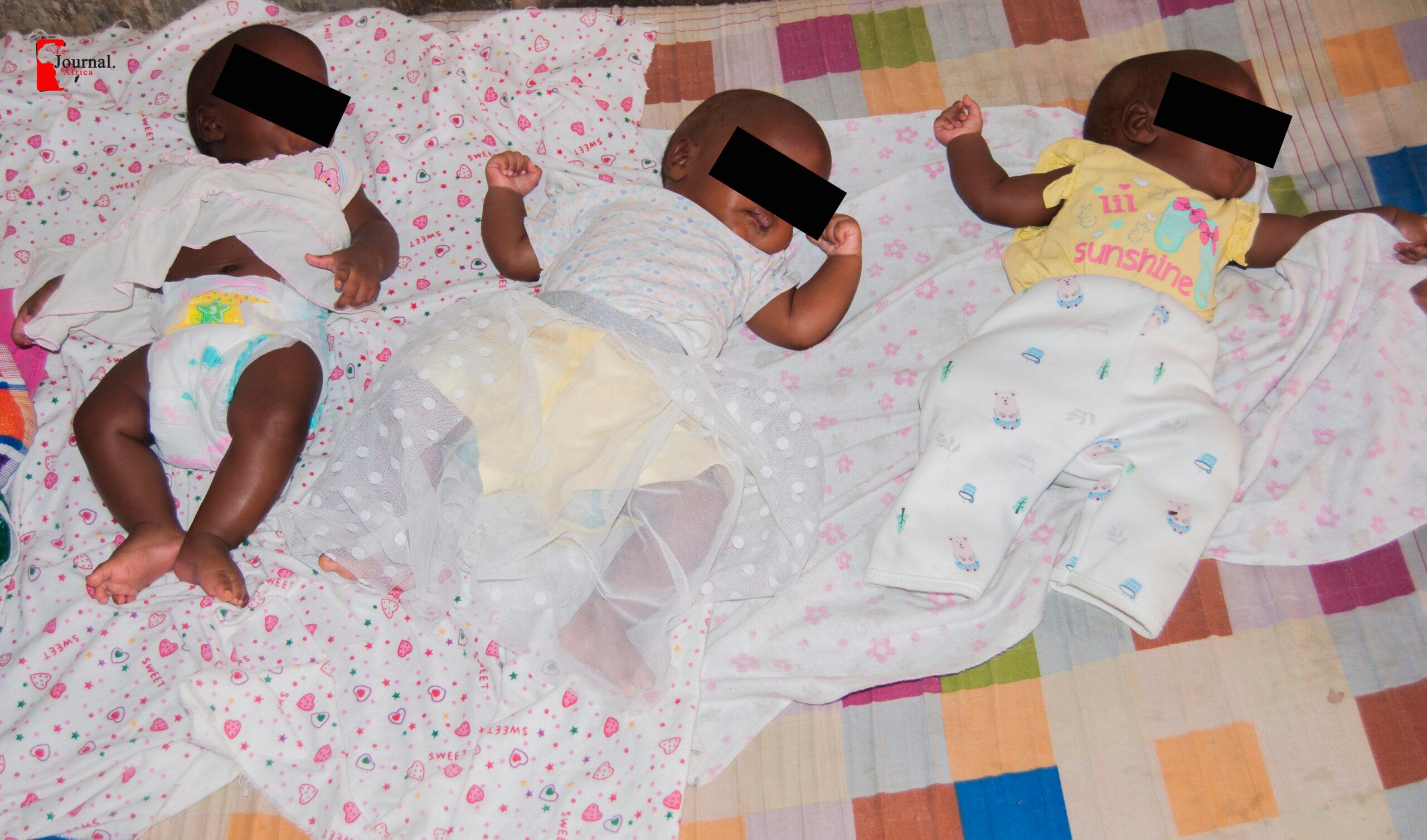
Raising a single child can be complicated, given the many expenses involved. But what happens when it is not one child, nor two, but three who arrive all at once? When the question arose in the editorial meeting, Journal.Africa wanted to discover the daily life of a family with triplets. After finding the contact details of a family who recently had triplets, we set off. Heading to Ntahangwa commune, Kamenge zone in the north of Bujumbura city.
Stany* and Claudette* live in a house with one bedroom and a living room. Old paint that was perhaps once white covers the walls. No furniture in the house. We sit on small stools facing the triplets lying on a mattress. A neighbor and Claudette's mother-in-law came to visit them.
Indeed, on August 26th last, the family of Stanislas and Claudette welcomed triplets. Living in extreme precarity, this birth brings them no joy. The young family does not see how these babies will grow up.
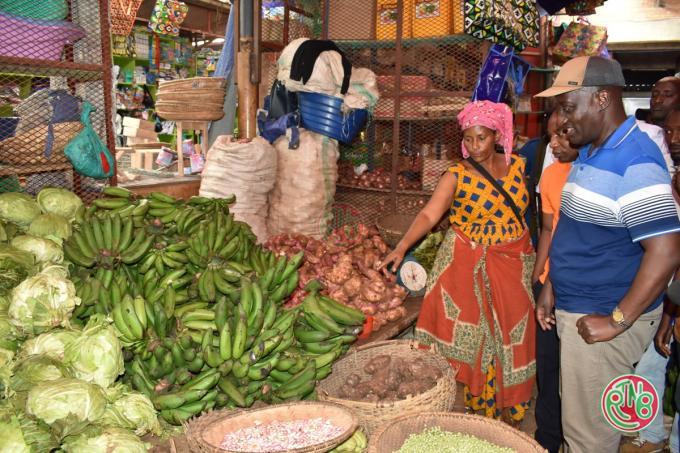
Claudette says she was so weak when she was pregnant. "I could not go a week without hospitalization," she admits. Previously, the young mother was a seller of eggplants at the market called ''COTEBU''. Following the pregnancy and the ailments that followed, she had abandoned her business.
"In the maternity ward, I cried all the time. The other mothers next to me were happy and kept comforting me. I looked at the three children, I thought about the miserable life we live with my husband, and tears flowed," the young mother recalls.
The mother warmly thanks the government for its assistance. "Had it not been for the help from the ministry of solidarity, I would not have been able to keep these children alive," she says. Indeed, the ministry gave her milk, supplementing breast milk. In addition to that, the family benefited from food and non-food items from the ministry responsible for solidarity.
Yet, the family still has so many needs. Claudette hopes that at least her husband finds work, because the family has so many needs that government assistance does not cover such as rent, food, clothes, …
Read: Burundi: Young entrepreneurs lament gaps in national youth policy
It is a purely biological phenomenon. Triplets are born in three cases, according to the French website parents.fr. One egg is fertilized by a single sperm, and the formed egg splits into three embryos, thus giving birth to identical triplets.
Moreover, the 3 eggs can be expelled by the ovary at the time of ovulation, particularly in the context of simple ovarian stimulation (without in vitro fertilization), and be fertilized by three spermatozoa, resulting in three completely different embryos, each with its own genetic heritage, which will develop side by side in utero.
Furthermore, two eggs can be fertilized by two different spermatozoa, giving rise to two embryos. But one of them can split in two to result in true twins. The triple pregnancy is then made up of two homozygous twins and a third child who differs from the other two.
It should be noted that as of December 31st last, 67 Burundian families who had given birth to triplets were receiving government assistance as indicated by Imelde Sabushimike, Minister of National Solidarity, Social Affairs, Human Rights and Gender.
Also read: Multiple pregnancy: what you need to understand
Eric Niyoyitungira
Our editors' picks of what matters. Monday to Friday.
By subscribing, you accept our privacy policy.