Article
Preparing the article…
If a translation is needed, this may take a few seconds.
If a translation is needed, this may take a few seconds.
Medium-sized private enterprises with financial capital between 100 million and 1 billion BIF say they are not receiving financial assistance from the government. These companies are demanding support. However, the Burundi Development Agency (ADB) indicates that the state offers exemptions for Small and Medium Enterprises (SMEs) in order to…
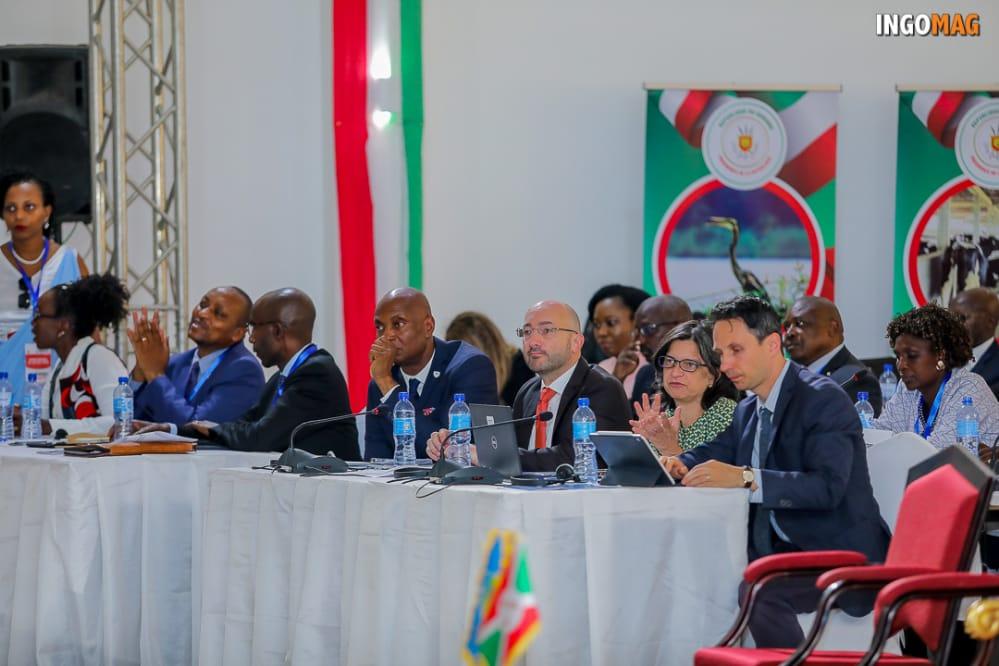
Gathered in a national forum on Wednesday, November 2, 2022 in Bujumbura, leaders of medium-sized enterprises in the Burundian private sector are pleading for assistance. Referring to the implementation of the Economic Empowerment and Employment Program for Youth (PAEEJ) in April 2021, the Executive Director of Great At Vision Group, Thierry Ndabigengesera, denounces, on the sidelines of this forum marking the first edition, privileged government assistance to small and large enterprises.
With capital ranging from 100 million to 1 billion BIF, medium-sized enterprises in Burundi's private sector are raising challenges regarding the lack of government financial support and the opening of a chamber or financing framework to visibly support medium-sized enterprises. These companies are requesting harmonization between Small and Medium Enterprises (SMEs).
The Burundi government offers small and medium enterprises 750,000 USD annually in terms of exemptions. For enterprises based in Bujumbura, a sum of 500,000 USD is reserved for them, while those in the interior of the country can benefit from assistance up to 250,000 USD.
"The government does not subsidize enterprises, but it facilitates the business climate in order to have a favorable environment for business," said Didace Ngendakumana, General Director of the ADB during this national forum of the private sector. For him, medium-sized enterprises located between 100 million and 1 billion are also assisted by the state.
Here, the advantages are enormous for medium-sized enterprises, he indicated. They can benefit from this offer through VAT exemptions on equipment for their proper operation. He adds that if these medium-sized enterprises want to buy land for construction, buildings, they are exempt from transfer fees equivalent to 3% of the purchase cost of this investment.
Medium-sized enterprises are authorized to notify the ADB of any problem encountered on the ground in order to resolve the issue and find a solution, M. Ngendakumana urged them.
With its vision "you cannot have sustained growth without a dynamic private sector," the World Bank (WB) wants the private sector to be a catalyst for resources. "At this level, one should not view the WB in terms of financing but rather as a catalyst for resources coming especially from the private sector," clarified Albert Zeufack, director of operations of the WB during this national forum.
For Burundi's case, M. Zeufack says that its economy is growing at less than 3% in terms of per capita growth while the population growth rate is above 3%. This negative growth rate is at the origin of low investments. According to him, weak investments in Burundi are reflected in the lack of dynamism in the private sector contrary to other African countries. In other African countries where population growth is higher, it is the private sector that invests and profits to generate returns and added value, added M. Zeufack.
The WB director of operations proposes the use of resources (iron, nickel, coltan and others) to develop and not wait for financing from this institution. He criticizes financing because if one starts with financing, resources will be wasted, lost. "The country needs a reform that would allow the private sector to be dynamic and especially if these changes are made at macroeconomic and structural levels this could create fluid currency markets that will no longer be a constraint for the private sector," advises Mr. Zeufack.
To contribute to the private sector, M. Zeufack says that the WB conducts studies analyzing collective data from different countries in the world, because these studies influence effective reforms for financing granted by the WB.
Another contribution is that this world institution brings international partners together by organizing national and international forums to help these African countries develop, through exchange of experience, reiterated M. Zeufack.
Know that the WB has doubled its portfolio for Burundi over the last three years. It is currently 1.1 billion dollars and this amount is already directed toward projects to boost private sector dynamism.
Our editors' picks of what matters. Monday to Friday.
By subscribing, you accept our privacy policy.