Article
Preparing the article…
If a translation is needed, this may take a few seconds.
If a translation is needed, this may take a few seconds.
The announcement of a peace agreement between the United States and Iran raises hope and skepticism. While military hostilities ease, uncertainties persist regarding the sustainability of this agreement.
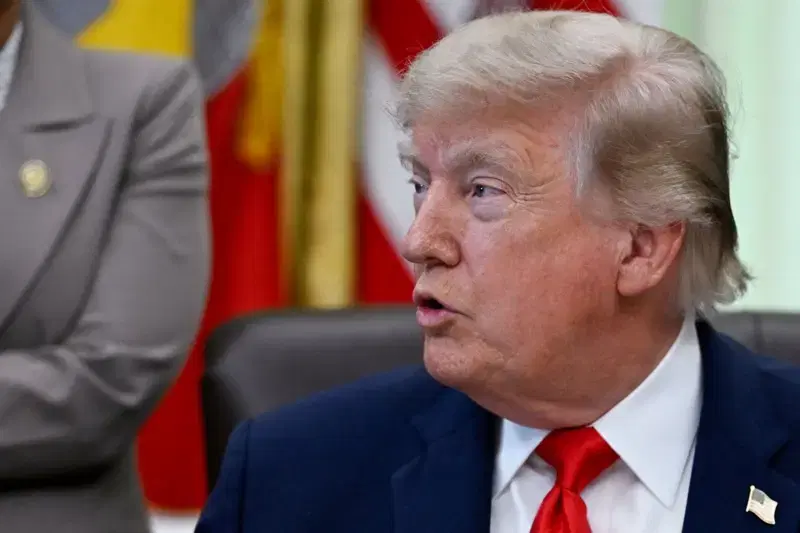
In a world where conflicts seem to multiply, the announcement of a peace agreement between the United States and Iran has been met with particular attention. It was the Pakistani Prime Minister who revealed that this long-awaited agreement will be signed next Friday in Switzerland, a country often chosen for its neutrality in international affairs. This event marks a significant advancement in a context where tensions in the Middle East have reached new heights in recent years.
According to the Iranian government, this agreement will end nearly four months of open hostilities, during which the two nations have come close to the point of no return several times. At the heart of this agreement is the promise of an immediate ceasefire and the reopening of the Strait of Hormuz. This maritime route is crucial for global oil transport, representing about 20% of global trade. Its temporary closure had led to notable volatility in oil markets, exacerbating global economic concerns.
A Temporary Economic Relief?
The reopening of the Strait of Hormuz is seen as a positive sign by many economic actors. According to financial analysts, this measure could help temporarily stabilize oil prices, which would be a breath of fresh air for a global economy already weakened by the COVID-19 pandemic and its multiple consequences. However, some experts warn against premature optimism. "The situation remains fragile," explains Farhad Kazemi, an international relations analyst based in London. "As long as the underlying tensions are not resolved, there is always a latent risk of future escalation."
Relations between Washington and Tehran have been marked by decades of mutual distrust and indirect conflicts. Since the United States withdrew from the Iranian nuclear agreement in 2018 under the Trump administration, relations have significantly deteriorated. The return to negotiations seems to indicate a potential strategic shift under the Biden administration, although the road to a lasting agreement is fraught with obstacles.
The recent history of U.S.-Iranian relations is punctuated by crises and failed attempts at rapprochement. Last March, we reported that Mike Pompeo had expressed the United States' willingness to engage in dialogue with Tehran without proposing concrete measures to advance towards peace. This situation had cast doubt on the genuine willingness of both parties to engage in fruitful discussions.
Could the new agreement mark a turning point? The international community is eagerly awaiting the concrete details that will be unveiled during the official signing in Switzerland. The central question remains: how will these two historically opposed nations manage to maintain a constructive dialogue in the face of their deep divergences?
According to European diplomats involved in the preliminary negotiations, the agreement will likely include commitments to gradual disarmament and a partial lifting of economic sanctions that have heavily burdened the Iranian economy for several years. These measures aim to create a conducive climate for economic and social reconstruction in Iran while ensuring that U.S. strategic interests in the region are not compromised.
The Backstory of a Historic Break
To fully understand this agreement, it is essential to revisit some key events that have shaped these tumultuous relations. In 1953, the overthrow of Iranian Prime Minister Mohammad Mossadegh orchestrated by the CIA left a deep scar in the Iranian collective memory. This event marked the beginning of a long period of perceived interference by Tehran as a constant threat to its sovereignty.
More recently, the assassination of General Qassem Soleimani by a U.S. strike in January 2020 triggered an unprecedented escalation of tensions between Washington and Tehran. In response, Iran intensified its nuclear activities while increasing its attacks against U.S. interests in the region.
These incidents illustrate why every attempt at rapprochement is viewed with suspicion by both parties as well as their respective allies.
The Economic Argument No Longer Holds
For some economic experts, it is essential that this agreement goes beyond the military framework to include broader economic and social dimensions. Iran is currently suffering from rampant inflation and high unemployment, which regularly fuel internal social movements. A lifting of sanctions could provide the Iranian government with the necessary leeway to stabilize its economy.
However, as Farhad Kazemi points out: "The main issue lies in the Iranian regime's ability to use these new resources to meet the pressing needs of its population rather than to strengthen its military apparatus." Historical precedents show that poorly targeted international economic support can sometimes exacerbate rather than alleviate internal tensions.
Regionally and internationally, this agreement could redraw some geopolitical lines in the Middle East, already highly fragmented by various often antagonistic alliances. Traditional U.S. allies such as Israel and Saudi Arabia are closely monitoring these developments as they fear that a rapprochement between Washington and Tehran could disrupt their own strategic position in this unstable region.
The potential impact on Israel also deserves consideration; this country has traditionally viewed Iran as its main sworn enemy in the Middle East for several decades now, particularly following the development of the controversial Iranian nuclear program perceived as an existential threat to national security by various high-level local political officials.
In conclusion, while this agreement undoubtedly marks a step towards peace after several tumultuous months marked by various serious military incidents that nearly escalated into widespread open conflict—particularly around the crucial Strait—it does not entirely eliminate all potential sources of future discord that could quickly resurface if vigilance is not maintained by the directly and indirectly involved stakeholders in this still fragile process, despite the initial encouraging appearances according to keen observers of the current complex and rapidly evolving international scene.
Our editors' picks of what matters. Monday to Friday.
By subscribing, you accept our privacy policy.