Article
Preparing the article…
If a translation is needed, this may take a few seconds.
If a translation is needed, this may take a few seconds.
The G5 Sahel summit, on February 15 and 16, is announced as an important new meeting point for the fight against terrorism in the Sahel. But the risk of terrorist contagion to coastal West African countries was recently highlighted by the top official of the DGSE, French foreign intelligence. Gilles Yabi published an opinion piece with our colleagues at Jeune Afrique in which he calls to "resist distraction, dispersion and fragmentation".
First, it should be recalled that the project for the expansion of jihadist groups toward the south was not new. There was an attack on the coast at Grand-Bassam in March 2016, in southern Côte d'Ivoire, another more recently in June 2020 at Kafolo in the north of the same country, and an abduction in northern Benin, near the border with Burkina Faso in May 2019.
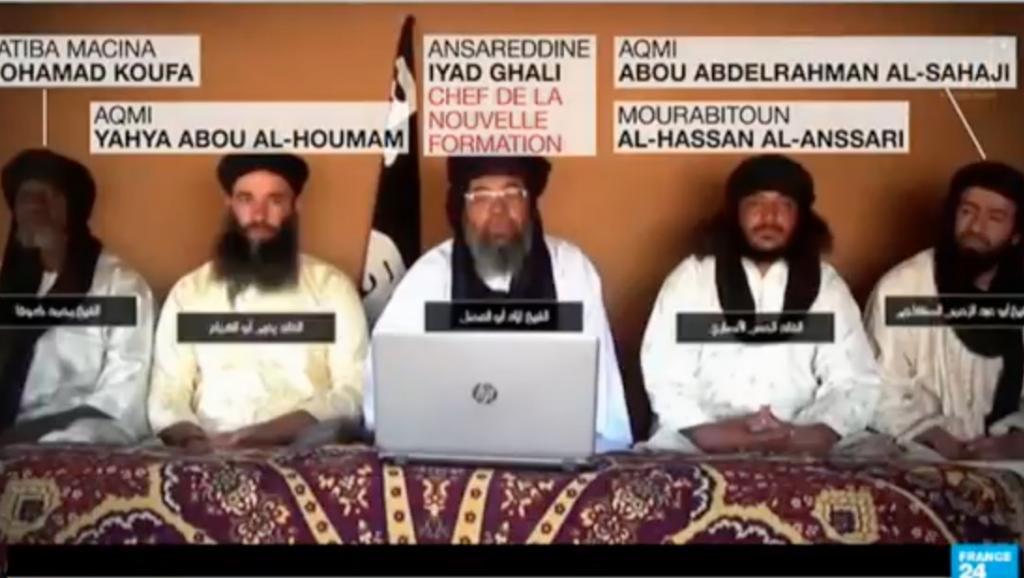
Since French, African and United Nations military interventions in 2013 have been concentrated on northern Mali, it could actually be understood that the survival of armed groups could only happen through the dispersal of their members wherever local conditions allowed. Central Mali was already the south of northern Mali. The move toward the south has in fact been underway for years, even before it was defined as an objective by AQIM (Al-Qaeda in the Islamic Maghreb) leaders.
Resisting distraction means focusing on the resolute and methodical pursuit of efforts to build the capacity of the states of the Sahel countries and all their neighbors to think, plan, organize and act, with a minimum of autonomy, to contain all sources and forms of insecurity, which do not come down to terrorist violence.
And states, whether the military component or civil administrations, are animated by men and women, from the level of strategy conception and action plans to that of implementation. It is by dissecting the most serious flaws, the most obvious dysfunctions in the functioning of states that content can be given to the refrain about the need for a political and economic relay of military action in the Sahel.
The fragmentation of the continent is that which appears to be continuing in the form, in recent years, of a geopolitical detachment of the Sahel from its immediate vicinity, in particular coastal countries whose northern regions share the same economic, social, ecological, and cultural characteristics as Sahel countries.
It is partly in the intensification of cooperation, links, and solidarity between the landlocked countries of the Sahel and their neighbors to the south that the answer to the challenges of the Sahel is found. The problems of the Sahel are those of West Africa and Africa before they are those of France and Europe. The opportunities too, moreover, because the Sahel also has significant resources to develop.
Absolutely. I was evoking a moment ago the imperative of building and strengthening states. But it is also a matter of transforming them by promoting the benevolence of all components of the state toward populations, starting with the armed forces which have unfortunately distinguished themselves on many occasions by serious abuses. Civilians must be protected at all costs and this requires an end to impunity. No attack committed against the civilian population must go unpunished, regardless of the perpetrators of that attack. This is one of the key messages of the citizen coalition for the Sahel, which brings together more than thirty civil society organizations from countries in the region and international NGOs.
Our editors' picks of what matters. Monday to Friday.
By subscribing, you accept our privacy policy.